Inheriting research & development background since 1975, SolarBK is proud to be a pioneer in laying the groundwork for clean energy industry in Vietnam and is now a leading company in this field.
To carry out the mission of applying clean energy into everyday life, we have researched and developed many solutions to make Solar power energy more diverse, convenient and cheaper.
When the energy market enters a phase of "revaluation": SolarBK's perspective at Solar & Storage Live Vietnam 2026
Publish date 09/07/2026
Share
The introduction of Decree No. 243/2026/ND-CP and Decision No. 963/QD-BCT marks the beginning of a new phase of "revaluation" for Vietnam's energy market, reshaping how businesses invest in, consume, and select energy solutions.
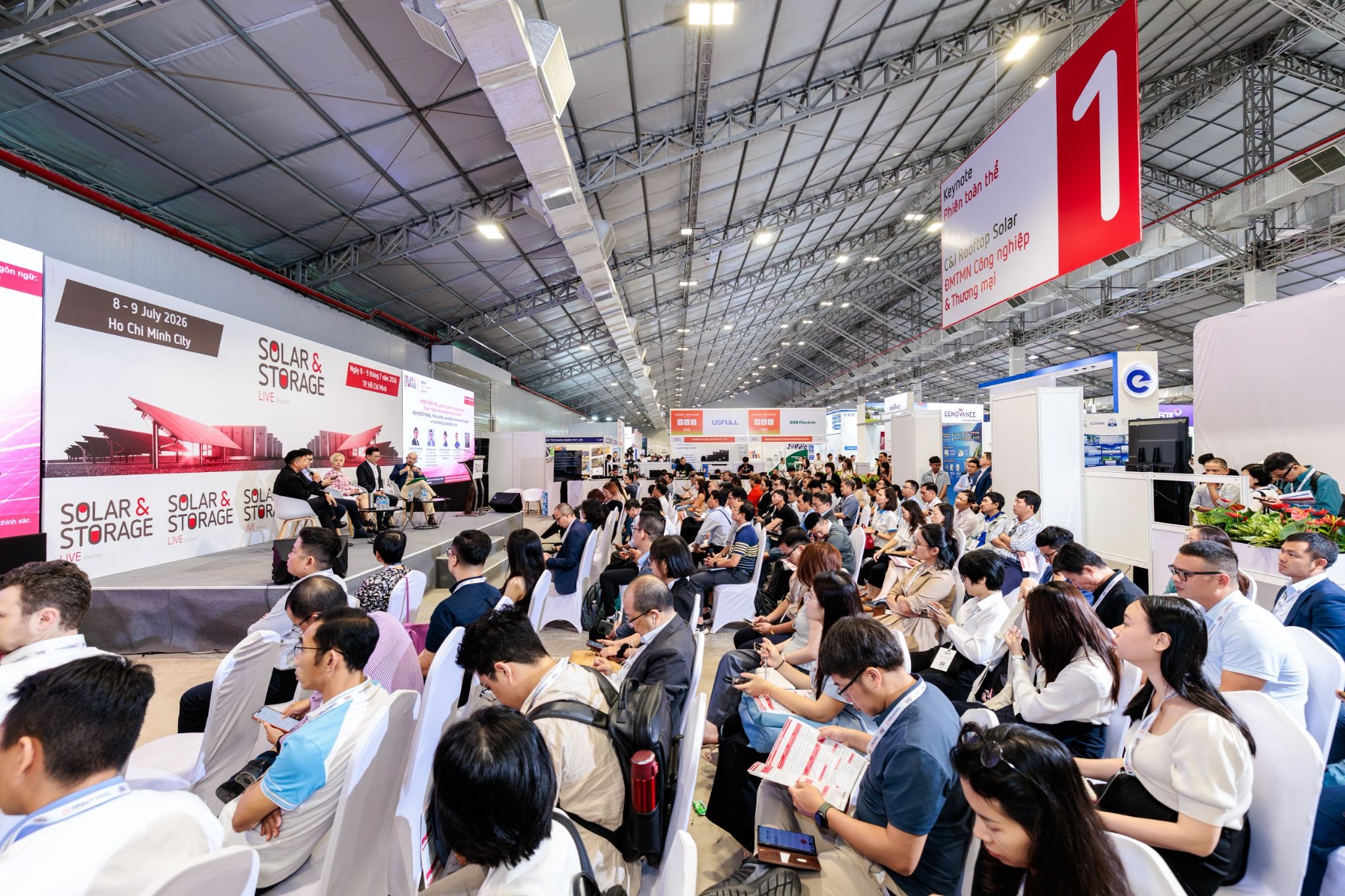
At Solar & Storage Live Vietnam 2026, SolarBK shared insights drawn from nearly 20 years of research, manufacturing, and delivering energy solutions. Through its participation, the company sought to contribute practical perspectives, strengthen industry dialogue, and deepen collaboration with partners to help drive a more efficient and sustainable energy market.
The Market Is Entering a Phase of "Revaluation"
According to SolarBK, Decree 243 and Decision 963 are driving four major shifts across the market: businesses are changing how they consume electricity under the new tariff structure; investment decisions are moving from maximizing installed capacity to maximizing economic value; ESG is evolving from a commitment into verifiable data; and solution providers are transitioning from system installers to long-term energy management partners.
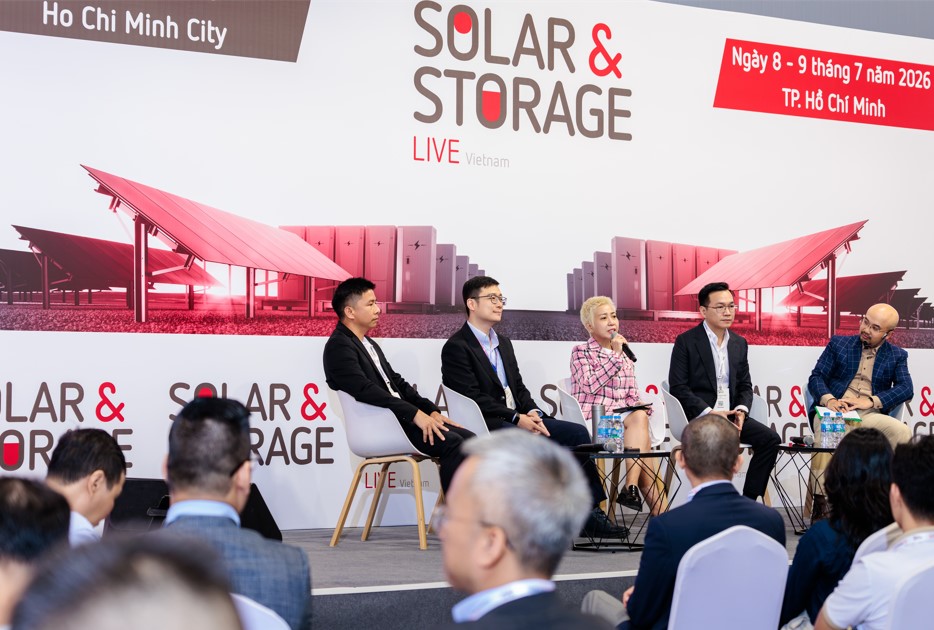
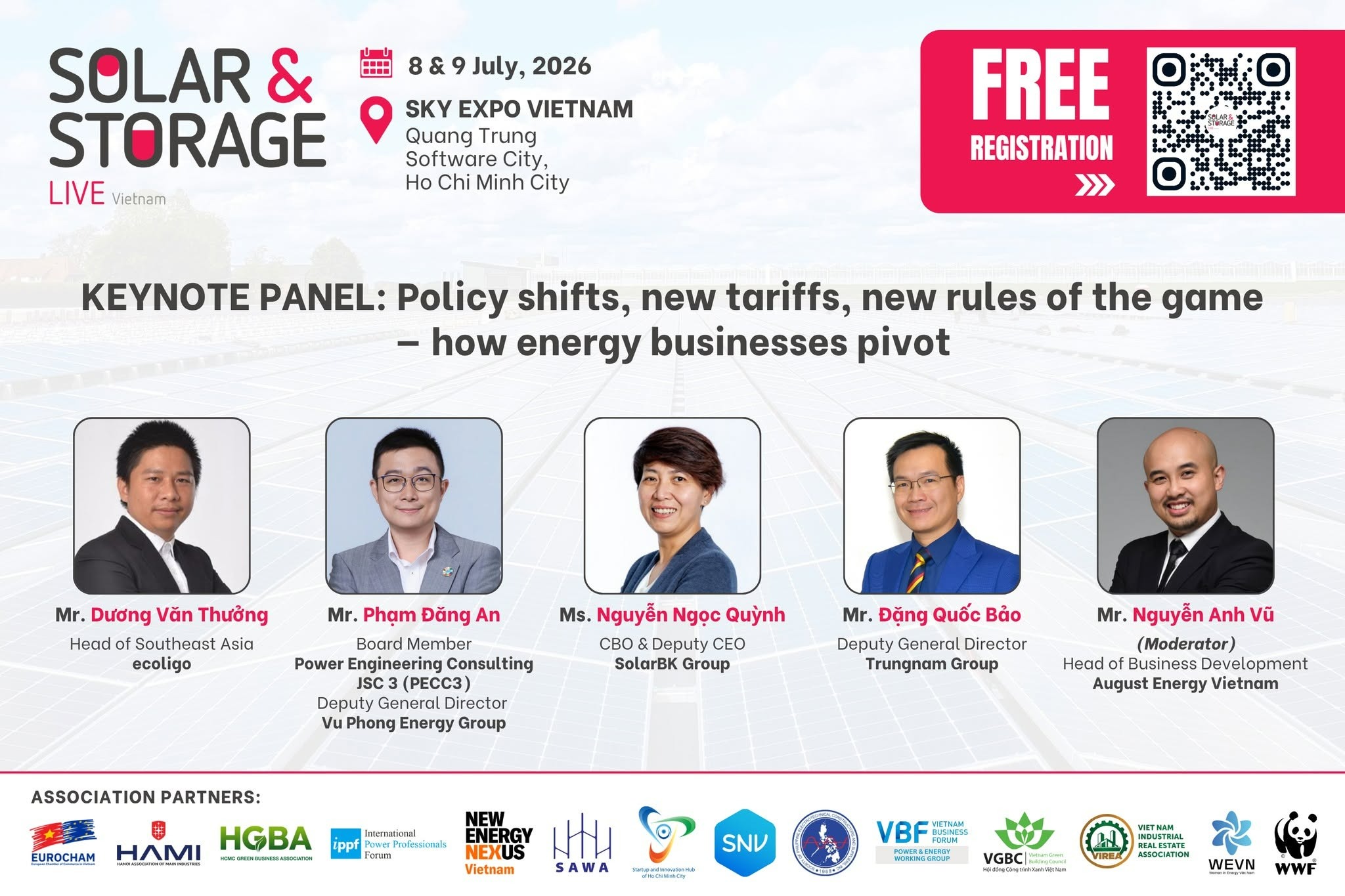
Speaking at the Keynote Panel, Ms. Nguyen Ngoc Quynh, Deputy CEO of SolarBK Group, described the current market as entering a phase of "revaluation".
Ms. Nguyen Ngoc Quynh, Deputy CEO of SolarBK Group, described the current market as entering a phase of "revaluation
She explained that changes in electricity tariffs and peak-hour pricing are fundamentally changing how the value of rooftop solar is assessed. A kilowatt-hour generated at midday no longer carries the same economic value as a kilowatt-hour required during evening peak hours. Today, customers are no longer looking simply for more electricity generation, they are looking for solutions that optimize load profiles, reduce peak demand, increase self-consumption, and ultimately lower real electricity costs.
Beyond rooftop solar, ESG is also being redefined. Driven by RE100, CBAM, and increasingly stringent global supply chain requirements, companies are expected not only to commit to using renewable energy but also to demonstrate measurable, traceable, and verifiable sustainability performance.
According to Ms. Quynh, these changes also require solution providers to rethink their approach. A commercial and industrial (C&I) project should no longer begin with the question, "How many kWp can be installed?" Instead, it should start with an in-depth understanding of the customer's load profile, electricity bill, and operational objectives. As a result, C&I solar should evolve into an integrated solution combining solar PV, Battery Energy Storage Systems (BESS), Energy Management Systems (EMS), long-term Operations & Maintenance (O&M) services, and ESG data to maximize value throughout the project's lifecycle.
Ms. Quynh also emphasized that competitive advantage in the new market will no longer come from a single capability, but from the ability to integrate the entire value chain, from research and manufacturing to project delivery, operations, and end-of-life recycling. This has been SolarBK's strategic direction for nearly two decades: supporting customers through solutions that deliver sustainable, long-term value. When Customers Are No Longer Buying Systems, but Investing in Energy Performance
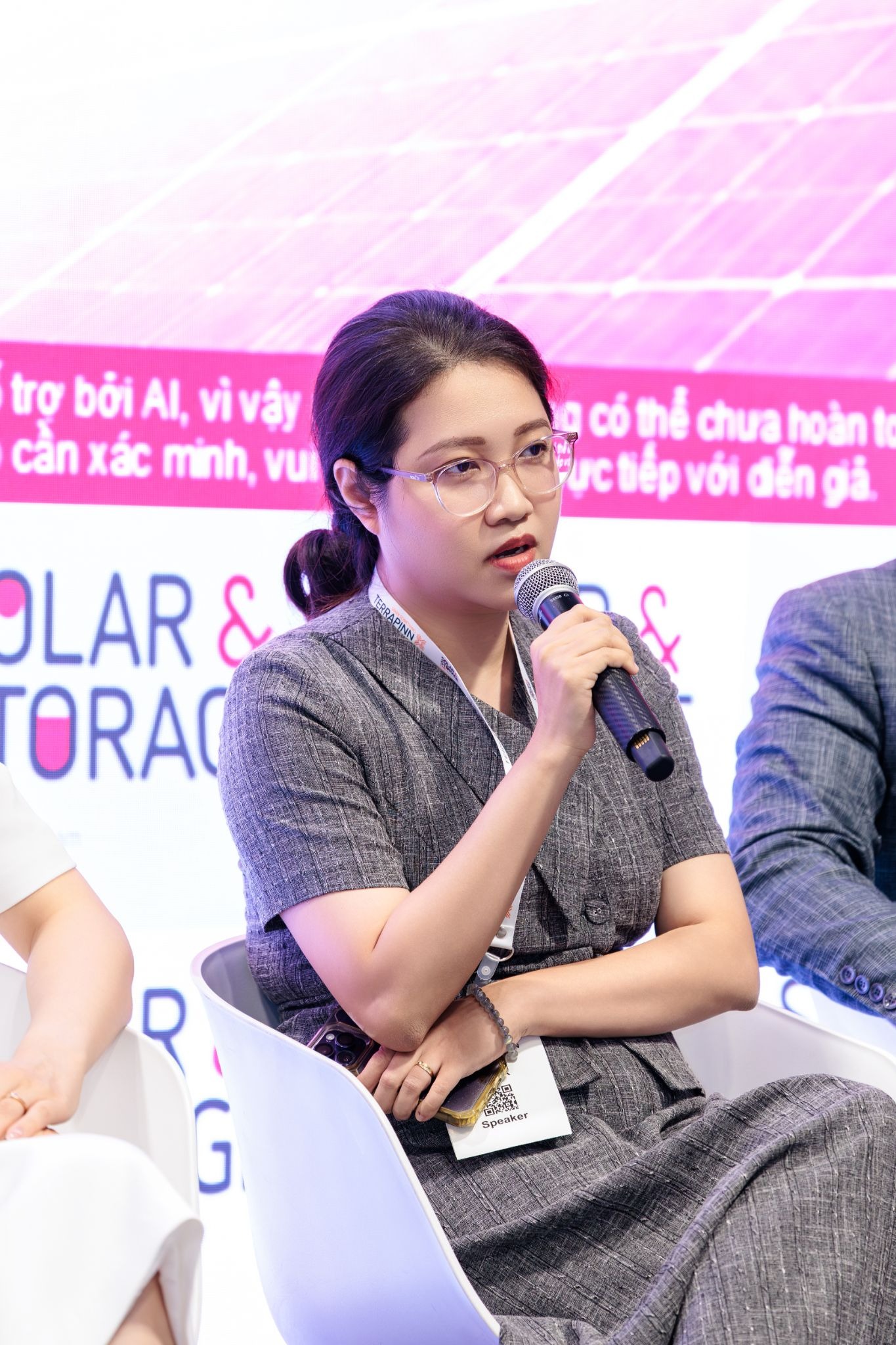
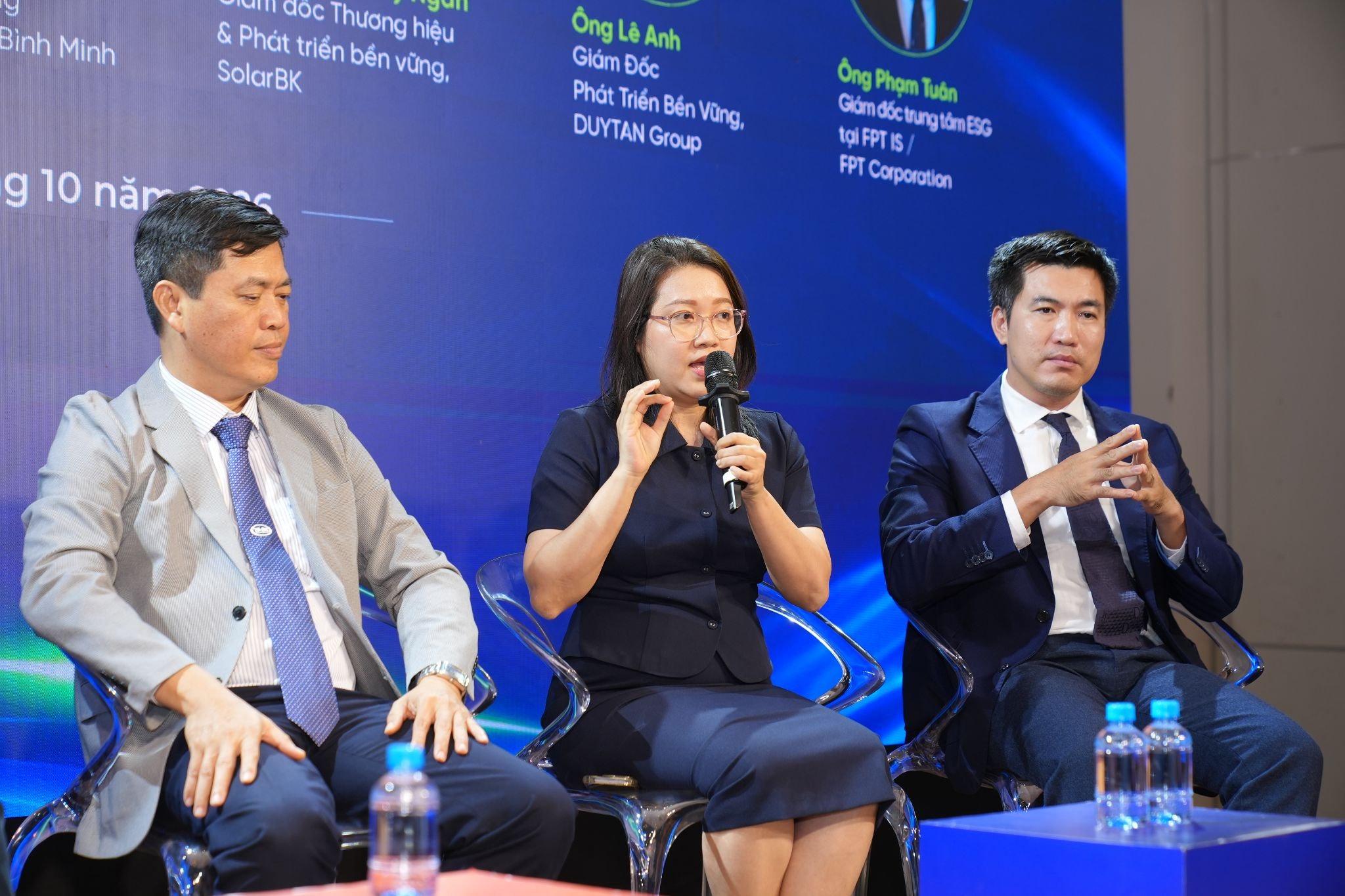
The market's "revaluation" is also changing how businesses invest in and evaluate energy solutions. This perspective was shared by Ms. Nguyen Thuy Ngan, Director of Sustainable Development at SolarBK, during the panel discussion on DPPA combined with BESS.
Ms. Nguyen Thuy Ngan, SolarBK's Director of Sustainable Development, shared her insights during the panel discussion on the DPPA model integrated with BESS.
According to Ms. Ngan, businesses today are no longer simply seeking systems that reduce electricity bills; they are investing in long-term energy performance. Their priorities now extend beyond payback periods to include optimizing total energy costs, ensuring operational reliability, meeting ESG requirements, and demonstrating renewable energy usage through verifiable data.
At the same time, every business faces a unique energy challenge. There is no universal formula that fits every enterprise. The value of an energy solution lies not in replicating a successful model, but in designing a solution tailored to each company's load profile, production requirements, and long-term development strategy. In other words, C&I customers are no longer buying solar systems alone, they are investing in energy performance and the long-term competitiveness of their businesses.
Solution Providers Must Evolve as Well
As customers shift their focus from upfront investment costs to long-term energy performance, solution providers must also adapt to meet these evolving expectations. With nearly 20 years of experience spanning research, manufacturing, investment, EPC, and energy project operations, SolarBK understands that a solar power system is not merely an infrastructure project delivered to a customer, it is an asset expected to create value over a 20–25-year lifecycle.
This requires more than technological expertise. It requires a deep understanding of industry-specific load profiles, operational requirements, ESG expectations across supply chains, and a long-term commitment to supporting customers throughout the system's lifecycle.
To meet these new expectations, SolarBK continues to invest in integrated solution capabilities, data-driven services, O&M expertise, and value-added services. Rather than beginning with technology or installed capacity, SolarBK starts with each customer's operational needs, load profile, electricity costs, and business objectives—ensuring long-term partnership throughout the lifecycle of every project.
In a market entering a phase of "revaluation," competitive advantage will no longer be determined by installed capacity or the number of projects completed, but by the ability to deliver measurable, verifiable, and lasting value. For SolarBK, this is not only how the company adapts to evolving policies and market dynamics—it is the strategic direction it has consistently pursued: working alongside customers and partners to create energy solutions that are efficient, transparent, and sustainable.