For many years, competitiveness in the textile and garment industry has been defined by productivity, labor costs, and manufacturing capacity. Today, however, as export markets continue to tighten sustainability requirements, energy management is becoming a new pillar of business competitiveness. Standards related to carbon emissions, supply chain transparency, and sustainable sourcing are increasingly influencing manufacturing operations worldwide. In this context, energy is no longer simply a matter of reducing electricity costs—it has become an essential part of long-term business strategy.
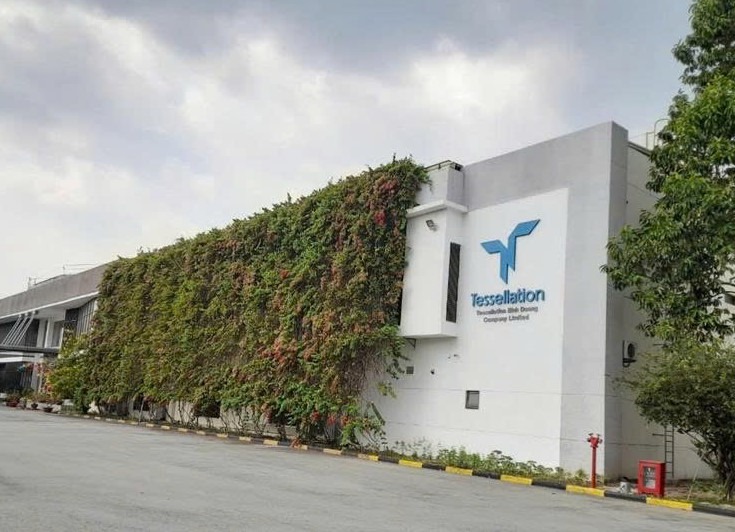
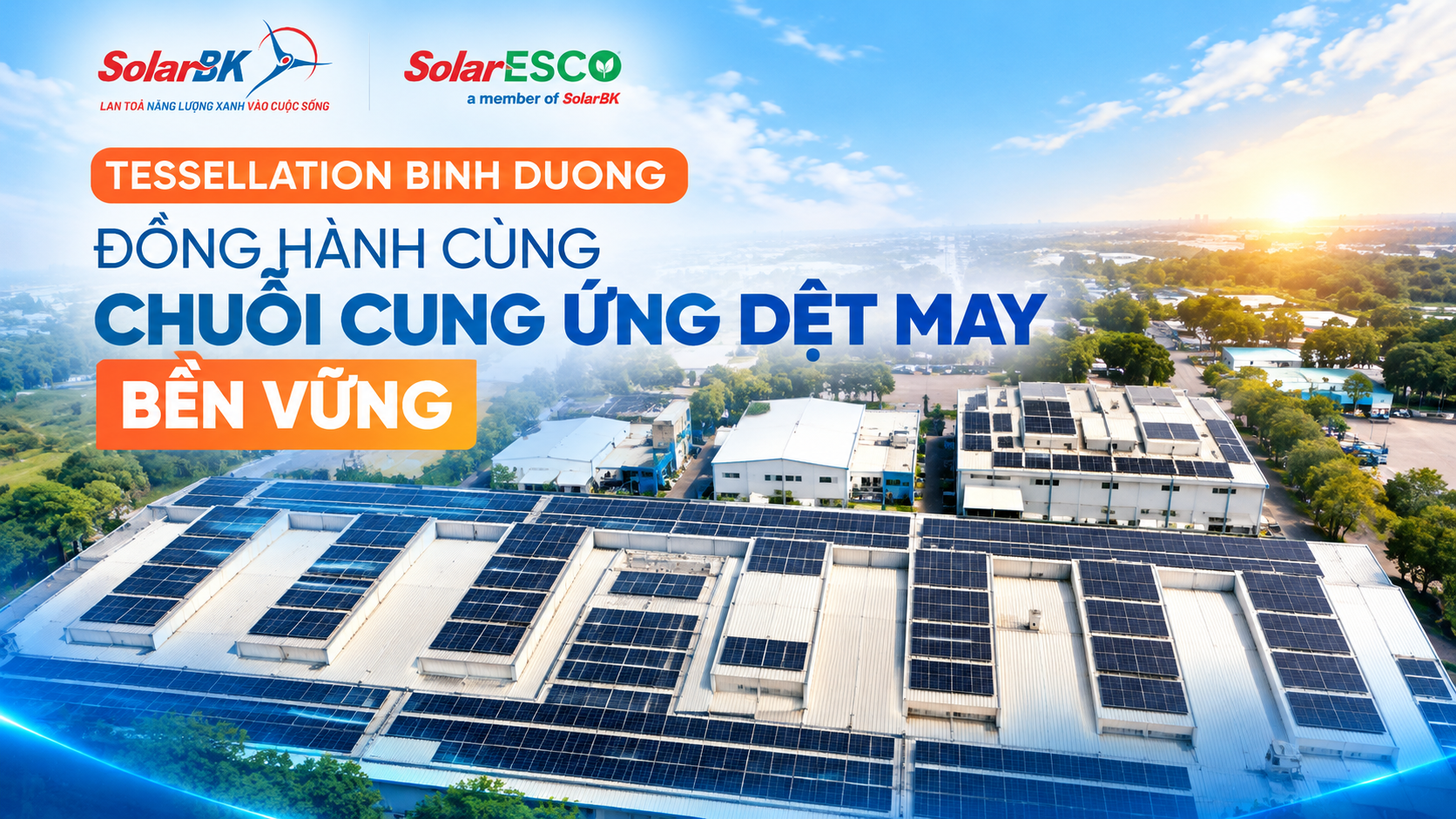
Against this backdrop, Tessellation Binh Duong selected SolarBK to develop an 841.96 kWp rooftop solar power system under the SolarESCO model at its factory located in VSIP 2A Industrial Park.
Energy Is No Longer Just a Cost Issue Tessellation Binh Duong is one of the manufacturing facilities operated by Tessellation Vietnam, a company that plays an important role in the global textile and garment supply chain through its production network across Vietnam.
Like many export-oriented manufacturers, Tessellation faces growing expectations from international customers regarding carbon reduction, traceability, and sustainability performance.
As a result, renewable energy is increasingly viewed not only as a cost-saving solution but also as a strategic tool for improving operational efficiency, strengthening competitiveness, and preparing for future market requirements.
According to the project design, the rooftop solar system is expected to generate approximately 1.297 million kWh of clean electricity annually while reducing around 855 tons of CO₂ emissions each year.
These figures highlight benefits that are becoming increasingly important for manufacturers: optimizing long-term energy costs while building a stronger foundation for sustainable growth.
Businesses Need More Than Just a Solar System The shift toward renewable energy is becoming increasingly visible across the textile sector and other export-driven industries. More companies are incorporating energy transition into their business strategies rather than viewing solar power solely as an electricity-saving measure.
However, technology and investment costs are only part of the decision-making process. With project lifecycles extending over decades, businesses need a trusted partner capable of supporting them throughout the entire journey—from assessment and design to implementation, operation, and long-term technical support.
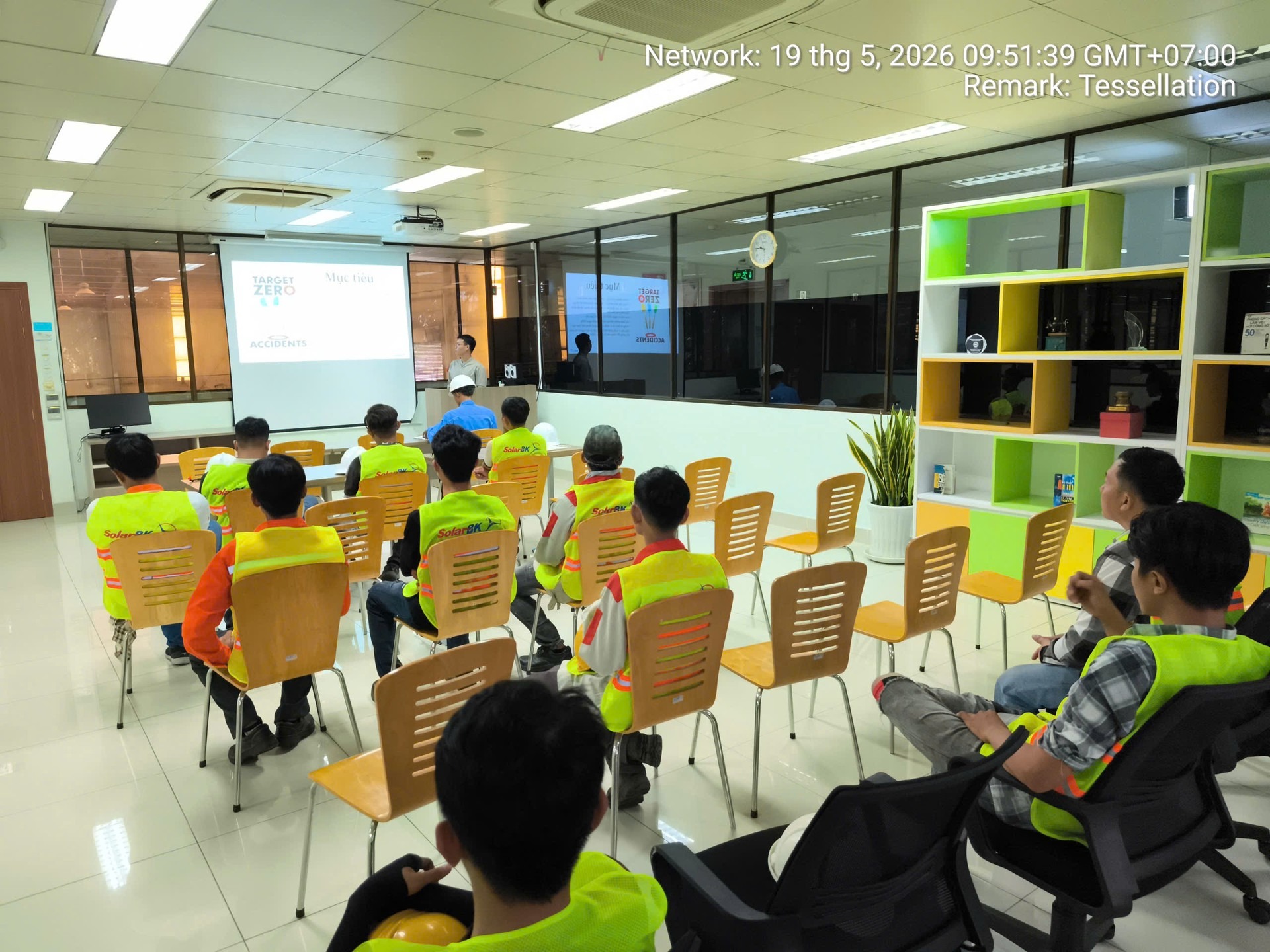
For the Tessellation Binh Duong project, the evaluation and preparation process lasted nearly six months. During this period, both parties worked together to assess energy consumption patterns, evaluate project feasibility, and develop a solution aligned with the factory’s long-term operational objectives.
Before partnering with Tessellation Binh Duong, SolarBK had successfully worked with numerous textile and export-oriented manufacturers, including Creative Group, Alliance One Innotex, Jim Brother's, Sedo Vinako, Thuận Phương Group, and Leading Star.
The proven success of these projects, combined with years of accumulated expertise in consulting, engineering, and operations, has helped establish SolarBK as a trusted partner for businesses pursuing energy transition and sustainable development goals.
From One Project to a Broader Industry Trend The Tessellation Binh Duong project reflects a broader transformation taking place across Vietnam’s manufacturing sector, where energy efficiency, sustainability, and competitiveness are becoming increasingly interconnected.
As environmental standards and carbon-related requirements continue to influence international trade, proactive investments made today can create meaningful advantages for businesses in the years ahead.
For many manufacturers, the journey begins with a simple question: how can existing facilities better utilize clean energy to support long-term growth objectives?
That is why more businesses are choosing experienced partners to help develop sustainable energy strategies that not only optimize operations but also strengthen competitiveness in an evolving global marketplace.
If your business is exploring energy transition opportunities, evaluating current energy consumption and rooftop solar potential could be the first step toward a more sustainable and resilient future.