Inheriting research & development background since 1975, SolarBK is proud to be a pioneer in laying the groundwork for clean energy industry in Vietnam and is now a leading company in this field.
To carry out the mission of applying clean energy into everyday life, we have researched and developed many solutions to make Solar power energy more diverse, convenient and cheaper.
Peak-Hour Electricity Pricing Is Reshaping Corporate Energy Strategies
Publish date 26/05/2026
Share
For many years, most businesses viewed electricity as a relatively fixed operational expense. The primary concern was how much electricity was consumed each month and how to reduce electricity costs by a few percentage points.
However, under the new electricity pricing framework, energy is gradually becoming a matter of load management, operational optimization, and long-term energy strategy.
According to the latest regulations issued by Vietnam’s Ministry of Industry and Trade, peak-hour electricity pricing has been adjusted to focus more heavily on evening hours, from 5:30 PM to 10:30 PM, six days per week. Peak electricity prices can now reach approximately VND 5,422/kWh for commercial customers and around VND 3,640/kWh for manufacturing customers, depending on voltage levels.
This is not merely a technical adjustment in electricity pricing. In reality, Vietnam’s power system is entering a large-scale transition phase aimed at reshaping electricity consumption behavior to reduce grid pressure and adapt to changes in the national energy mix, especially as renewable energy penetration continues to increase.
When Electricity Is No Longer a “Fixed Cost”
According to energy experts, Vietnam’s national power system is facing increasing pressure from growing electricity demand, particularly during extreme heat periods.
At the same time, the rapid development of solar energy over the past several years has significantly changed the operational characteristics of the power grid. Solar generation is concentrated mainly during daytime hours, while electricity demand rises sharply in the evening, when solar power generation is nearly unavailable.
Energy is gradually becoming a matter of load management, operational optimization, and long-term energy strategy.
This creates an increasingly large gap between daytime and evening loads, a pattern commonly seen in power systems with high renewable energy penetration.
This is also why the new peak-hour pricing mechanism is shifting more strongly toward evening hours. The goal is not only to optimize national grid operations, but also to create clearer price signals that encourage businesses to adjust energy consumption behavior, shift loads, and invest in more advanced energy management solutions.
In other words, the electricity market is gradually shifting from the mindset of “how much electricity is used” to “when electricity is used.”
This represents a major change for businesses.
The same amount of electricity consumption can now result in significantly different costs depending on the time of use. As a result, energy management is no longer simply a technical issue — it directly impacts financial efficiency, operational strategy, and long-term business competitiveness.
From “Solar Power” to “Energy Management”
In this new context, the market is also changing its perspective on solar energy.
Previously, businesses primarily installed solar systems to reduce daytime electricity costs. Today, however, the energy equation has become far more complex. As peak pricing increasingly shifts to evening hours, when solar systems generate little or no electricity, businesses are becoming more concerned with overall load management rather than simply reducing grid electricity consumption.
This is accelerating the trend toward integrated energy systems that combine multiple solutions, including rooftop solar, battery energy storage systems (BESS), energy management systems (EMS), and real-time load optimization technologies.
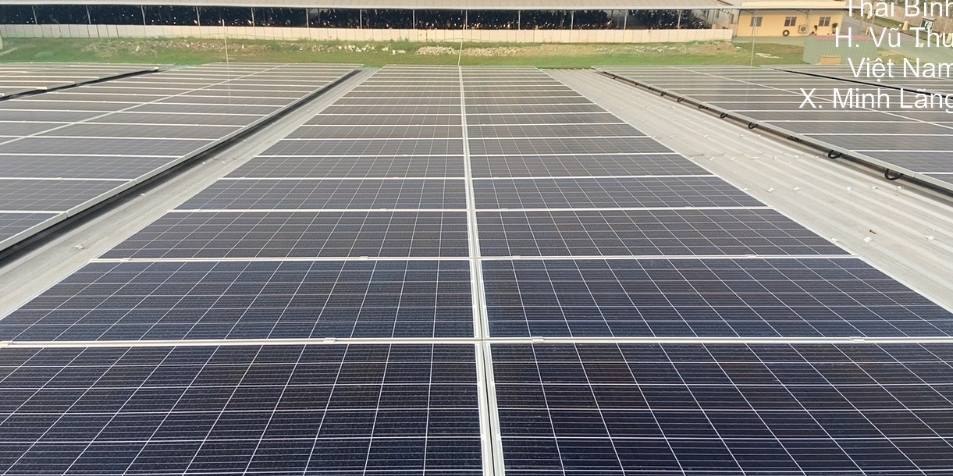
At Creative (Thai Binh), SolarBK deployed a 3.628 MWp rooftop solar system for an export footwear manufacturer.
According to industry experts, this marks an important transition period for the energy market. In the future, the value of solar energy will no longer lie solely in electricity generation, but in its ability to integrate with storage and intelligent load management solutions to help businesses:
optimize energy costs,
reduce peak-hour electricity pressure,
stabilize operations,
improve energy independence,
and enhance resilience against electricity market fluctuations.
This demonstrates that the energy market is entering a stage where energy management capability itself will become part of a company’s competitive advantage.
The market is therefore shifting from a “saving electricity” mindset toward “long-term energy management.”
SolarBK and Industry-Specific Energy Challenges
In reality, every industry faces completely different energy challenges, requiring tailored approaches to load management, operations, and long-term investment strategies.
SolarBK has not only been monitoring market trends but has also proactively prepared integrated solutions such as EMS and BESS to help customers adapt to the new pricing mechanism.
In the logistics sector, where operational “trial and error” is nearly impossible, load optimization and system stability are becoming increasingly critical.
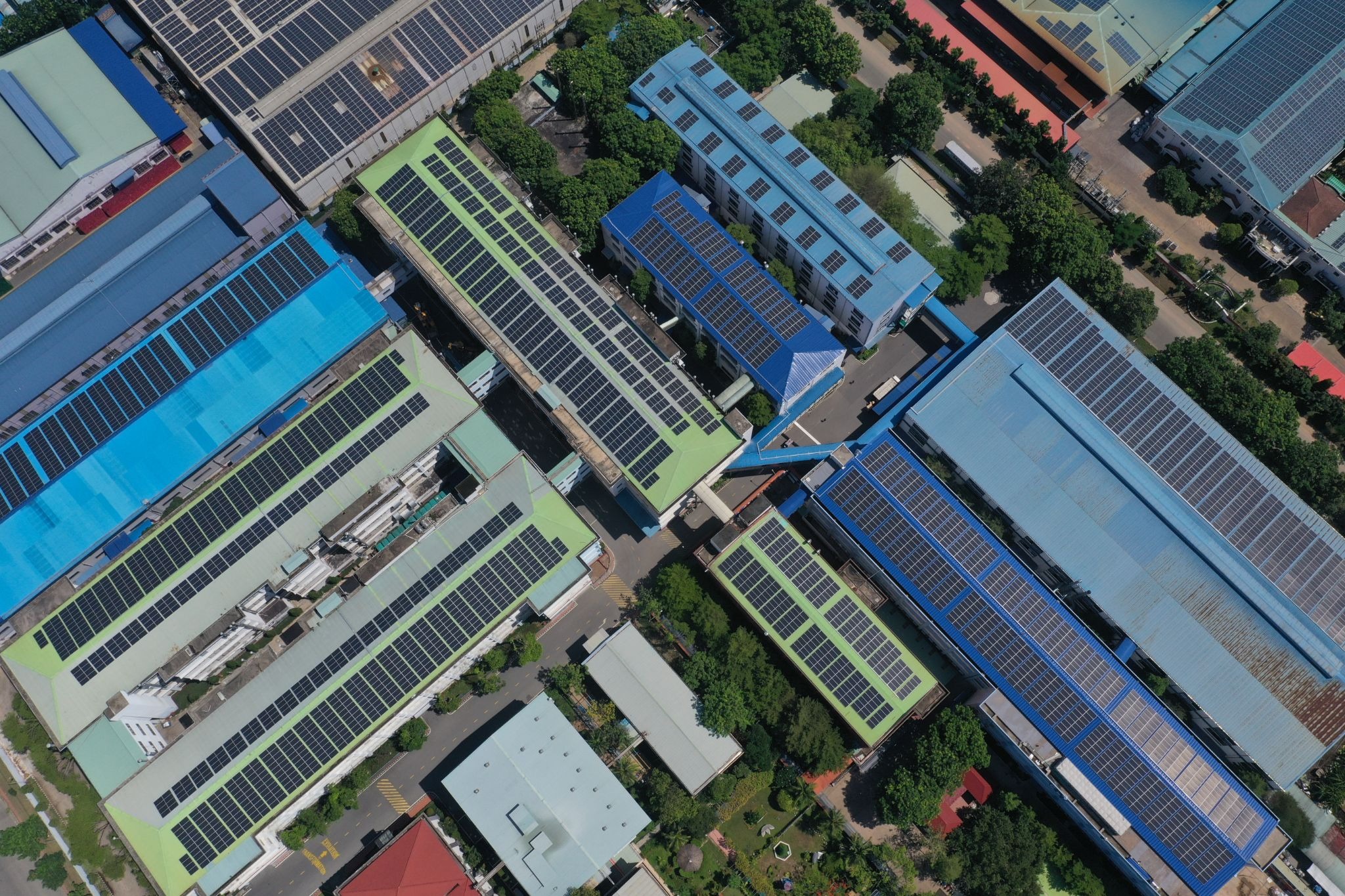
At ICD Tan Cang – Song Than, SolarBK deployed a 500.96 kWp rooftop solar system using 1,616 IREX solar modules to help optimize electricity costs for a continuously operating logistics center.
In the export footwear industry, where daytime electricity demand is high and ESG requirements from global supply chains continue to intensify, SolarBK has also implemented multiple projects for FDI manufacturers.
At Creative (Thai Binh), SolarBK deployed a 3.628 MWp rooftop solar system for an export footwear manufacturer. Meanwhile, Jim Brother’s Group, a manufacturing partner of Adidas, has also adopted solar energy solutions to reduce daytime electricity loads and support carbon reduction goals across the global supply chain.
Jim Brother’s Group, a manufacturing partner of Adidas, has also adopted solar energy solutions to reduce daytime electricity loads and support carbon reduction goals across the global supply chain.
What these projects have in common is not their scale, but the fact that corporate energy challenges are changing rapidly.
From manufacturing plants to logistics centers and export-oriented businesses, the market is moving from “electricity savings” toward “long-term energy and load management.”
In this context, the capability of an EPC partner is no longer measured solely by the number of installed solar modules, but by its ability to understand operational models, load characteristics, and industry-specific growth strategies in order to design suitable energy solutions.
The market is entering a new phase: Businesses will no longer compete based on who uses less electricity, but on who manages energy more effectively.