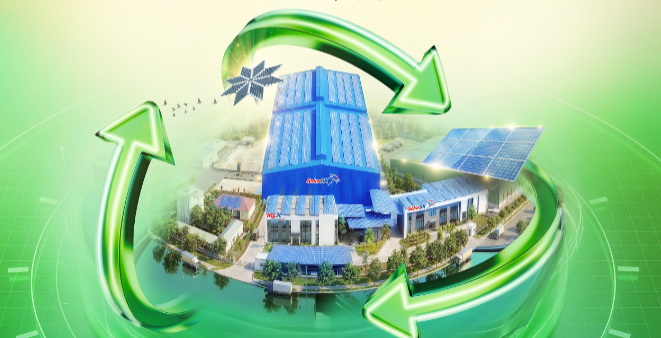
March 2026 indicates that Vietnam’s solar power market is entering a new stage of development as self-consumption mechanisms begin to be implemented more substantially, energy storage becomes a key component in load balancing, and solar panel recycling initiatives emerge as an important link in the circular energy value chain.
n this context, the technology partnership between IREX (SolarBK Group) and Hamada of Japan, together with large-scale integrated BESS projects, clearly reflects a transition from capacity expansion toward the development of integrated energy infrastructure for enterprises and industrial parks in Vietnam.
1. Policy: Shifting from Investment Incentives to System Operations A standout highlight of March is the clear shift in policy approach toward renewable energy. While the previous phase focused on expanding power generation capacity, new directives are now pivoting toward operational optimization, energy efficiency, and enhancing power system flexibility.
Government directives on strengthening energy conservation and promoting energy transition indicate that clean energy is no longer viewed as a supplementary component, but rather the foundation of a new economic growth structure. In parallel, the development orientation for the renewable and new energy industries continues to emphasize the role of smart grids, Battery Energy Storage Systems (BESS), and demand-side response mechanisms.
At the operational level, the power sector is synchronously deploying solutions to ensure electricity supply for 2026. Simultaneously, it is facilitating "self-production and self-consumption" rooftop solar and distributed energy resources to integrate more deeply into the system architecture. This demonstrates that corporate solar power is increasingly recognized as a load coordination component rather than just a localized generation source.
2. Projects & Markets: Energy Storage as a System Coordination Variable The renewable energy market in March witnessed a surge in projects integrated with deep technology, moving beyond simple hardware installation.
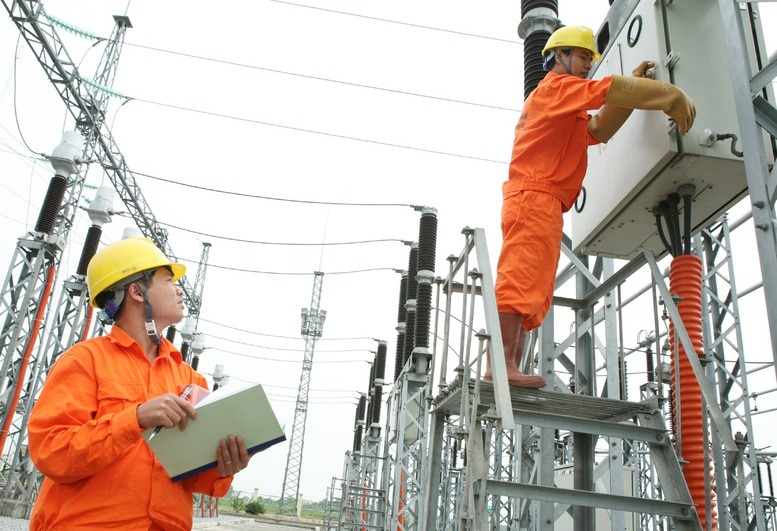
In key industrial hubs in the South, the power sector is accelerating the automation of medium-voltage grids and the digitalization of operations to ensure stable power for large-scale manufacturing complexes. Technical discussions throughout March revealed a strong trend in integrating AI into distributed power system dispatching. Corporate solar power has evolved from a local source into a smart load-balancing component, meeting the stringent energy transparency standards of international investors. (Investment Bridge/Báo Đầu tư, March 20, 2026).
Notably, the rooftop solar segment combined with storage (BESS) recorded breakthrough growth, fueled by the legal framework provided by Decree 57/2025/ND-CP on the Direct Power Purchase Agreement (DPPA) mechanism. Businesses in the F&B, textile, and footwear sectors are accelerating the signing of clean energy contracts to maintain competitiveness and fulfill "green certificate" requirements for exports to demanding markets. (Economy & Forecast/Kinh tế & Dự báo, March 18, 2026).
3. Partner News: Milestones from Leading Corporations March 2026 saw breakthrough moves from strategic partners within the green ecosystem.
Banpu Group: Officially launched its "Energy Symphonics" strategy in Southeast Asia in early March. This is a smart energy management model focusing on providing BESS solutions for high-tech infrastructure, such as Data Centers and AI manufacturing complexes. This move solidifies Banpu’s position in providing integrated energy solutions to meet the massive demand for stable clean energy in the digital age. (Banpu Newsroom, March 05, 2026).
V-Green (VinFast Ecosystem): Announced on March 18, 2026, a roadmap to invest 10 trillion VND to develop a network of 99 "super-charging stations" nationwide. The breakthrough element of this project is the 100% integration of solar power and in-house BESS systems developed by VinFast. This solution not only "greens" transportation infrastructure but also acts as a distributed power system, supporting load balancing for the national grid during peak hours. (Tuoi Tre Newspaper, March 18, 2026).
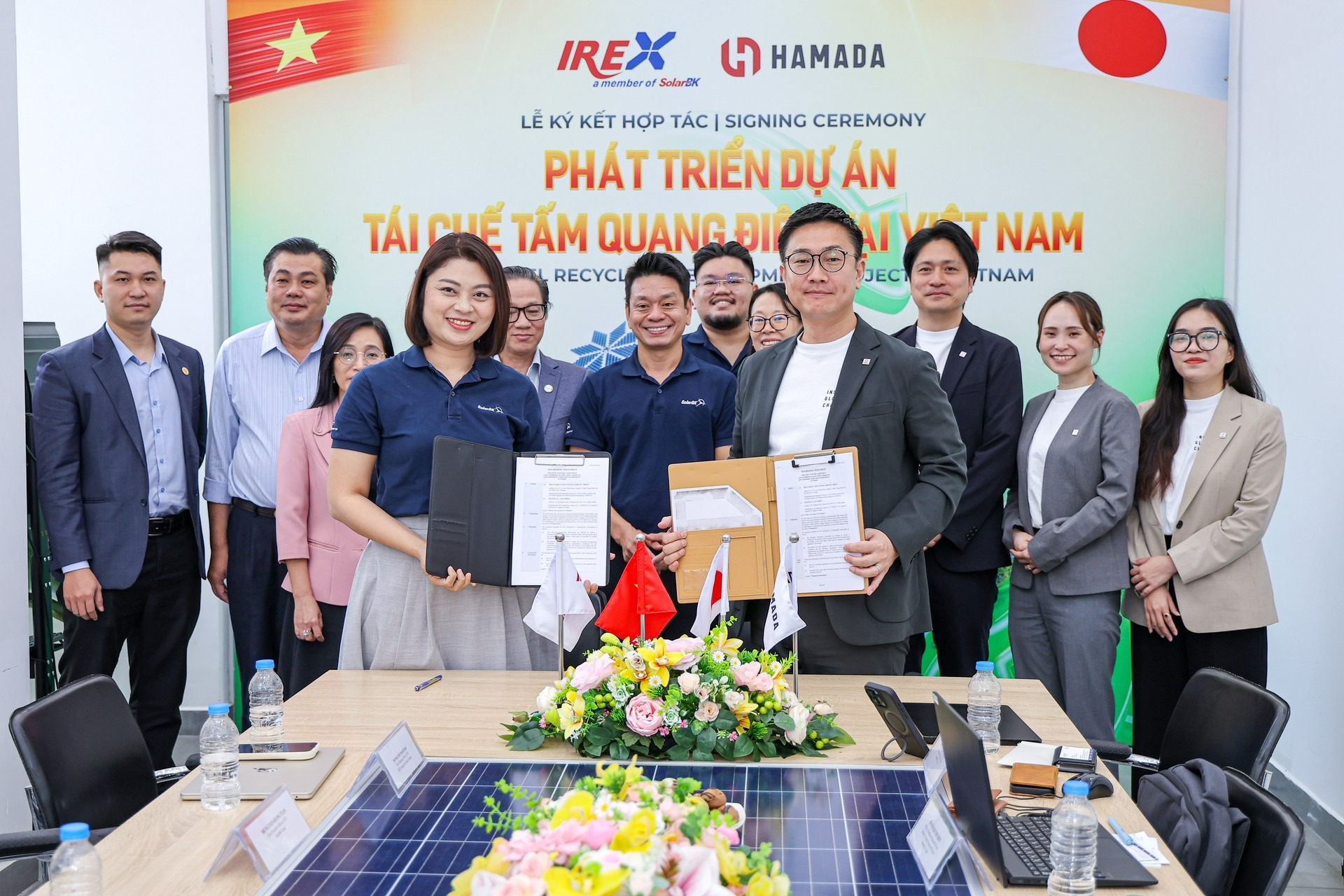
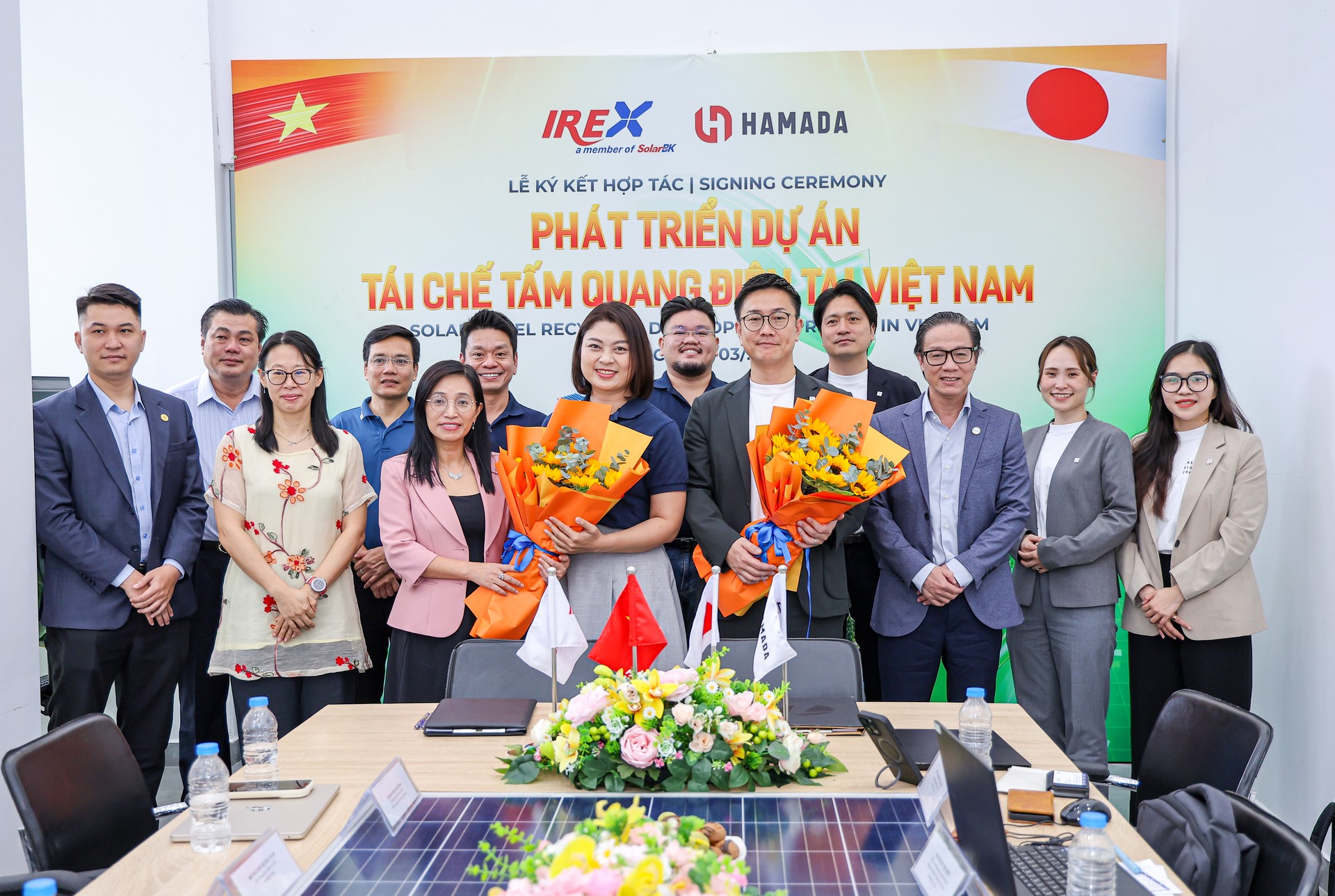
4. SolarBK: Outstanding Highlights of the Month Solar panel recycling opens a new circular value chain for the solar industry One of the most significant highlights of March is the cooperation agreement between IREX (a member of SolarBK Group) and Hamada Co., Ltd. (Japan) to develop a solar panel recycling project in Vietnam.
The facility is expected to process approximately 40,000 panels annually, recovering valuable materials such as glass, aluminum frames, junction boxes, and photovoltaic cells. This initiative represents an important step toward establishing a circular value chain for Vietnam’s solar industry as ESG standards increasingly become mandatory requirements in international markets.
The collaboration between Vietnamese and Japanese enterprises carries not only technological significance but also signals that the domestic solar sector is entering a new stage of development in which lifecycle management of equipment becomes a strategic component of clean energy infrastructure.
Financial structuring accelerates the deployment of large-scale integrated energy projects Alongside technological initiatives, March also recorded the growing role of financial institutions in clean energy project development.
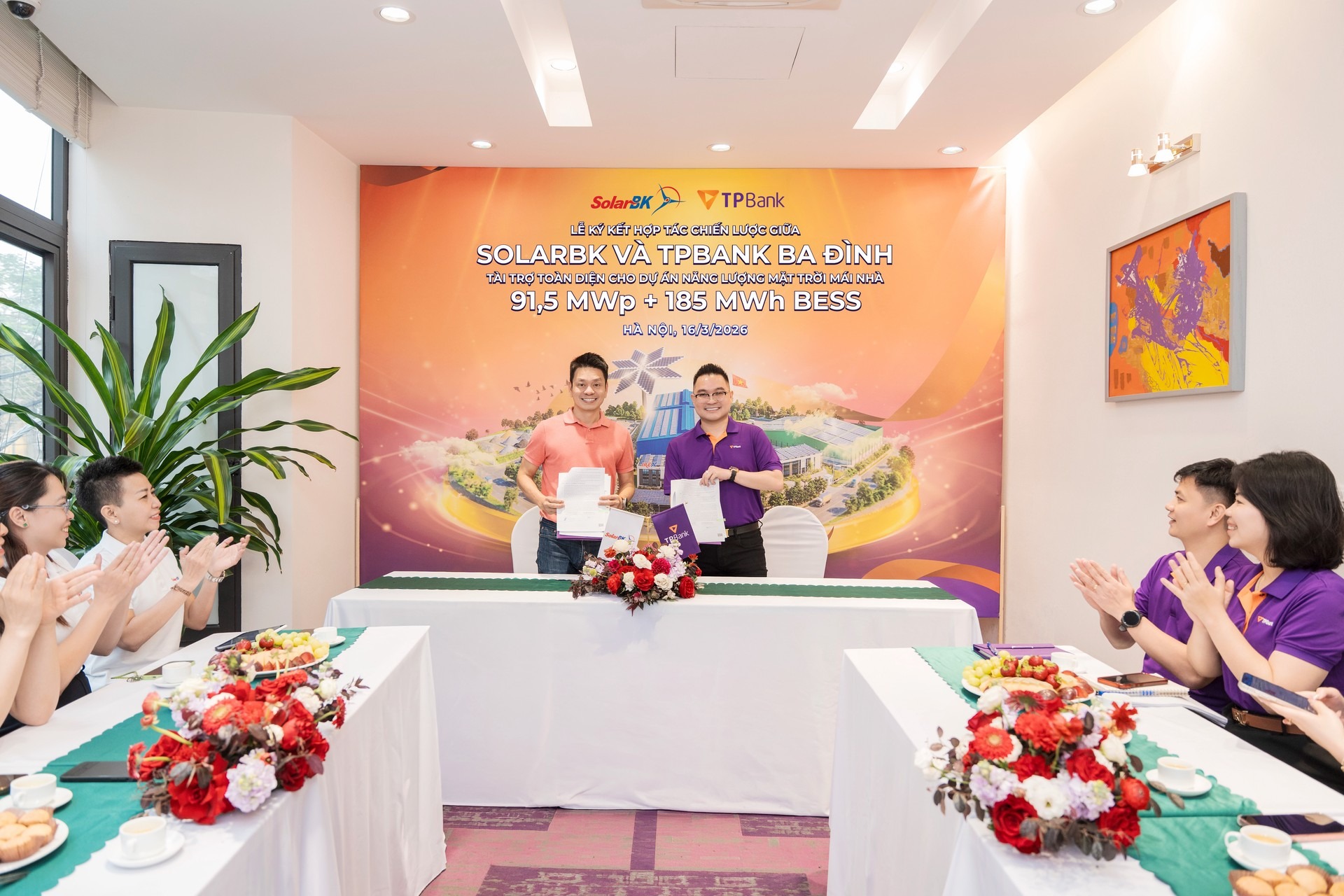
The cooperation agreement between SolarBK and TPBank Ba Dinh to finance a 91.5 MWp rooftop solar portfolio combined with a 185 MWh energy storage system demonstrates that integrated technology–finance–operation structures are becoming the dominant development model in the market.
Integrating BESS into project architecture not only optimizes electricity utilization efficiency but also reduces pressure on the grid while enhancing operational flexibility for corporate energy systems in an environment of increasingly dynamic load demand.
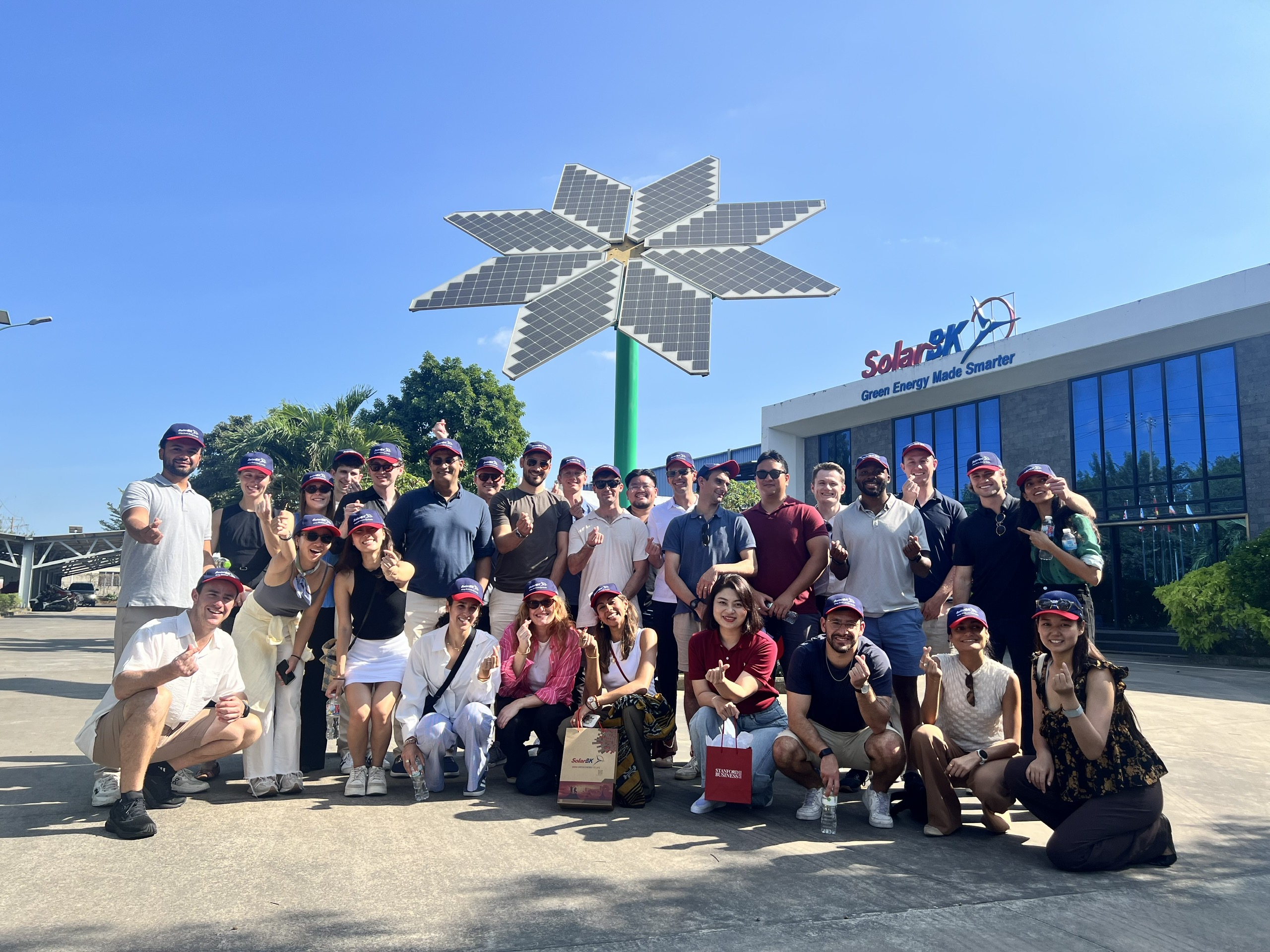
International academic engagement highlights the role of Vietnamese enterprises in the regional energy transition Another notable highlight of the month was the visit by MBA students from Stanford University to SolarBK and IREX.
The visit carried not only academic exchange significance but also reflected growing international interest in the role of Vietnamese enterprises within the regional energy transition landscape. SolarBK’s integrated ecosystem model, linking manufacturing, research, deployment, and financing, represents an approach well suited to fast-growing markets where renewable energy development is closely connected to industrial transformation strategies.
From the PNS Chun project to clean energy adoption in export supply chains At the implementation level, the 1,400 kWp rooftop solar project at PNS Chun factory in VSIP Quang Ngai demonstrates how clean electricity is becoming embedded within the operational structure of export-oriented manufacturers.
The system is expected to generate approximately 2.09 million kWh annually and reduce more than 1,400 tons of CO₂ emissions, helping enterprises meet sustainability requirements across global supply chains. This project also builds on earlier deployments within the Sedo Camping ecosystem, reflecting a broader trend toward scaling clean energy adoption across international manufacturing groups operating in Vietnam.
March 2026 outlook Overall, March reflects a clear structural shift in Vietnam’s solar market: from capacity expansion toward system integration, from incentive-driven development toward operational optimization, and from standalone installations toward energy infrastructure supporting industrial parks and export supply chains.
In this context, initiatives such as solar panel recycling, energy storage deployment, and large-scale financial partnerships indicate that Vietnam’s renewable energy sector is entering a new development phase in which technology integration capability, lifecycle asset management, and international value chain connectivity will become decisive factors for long-term competitiveness.