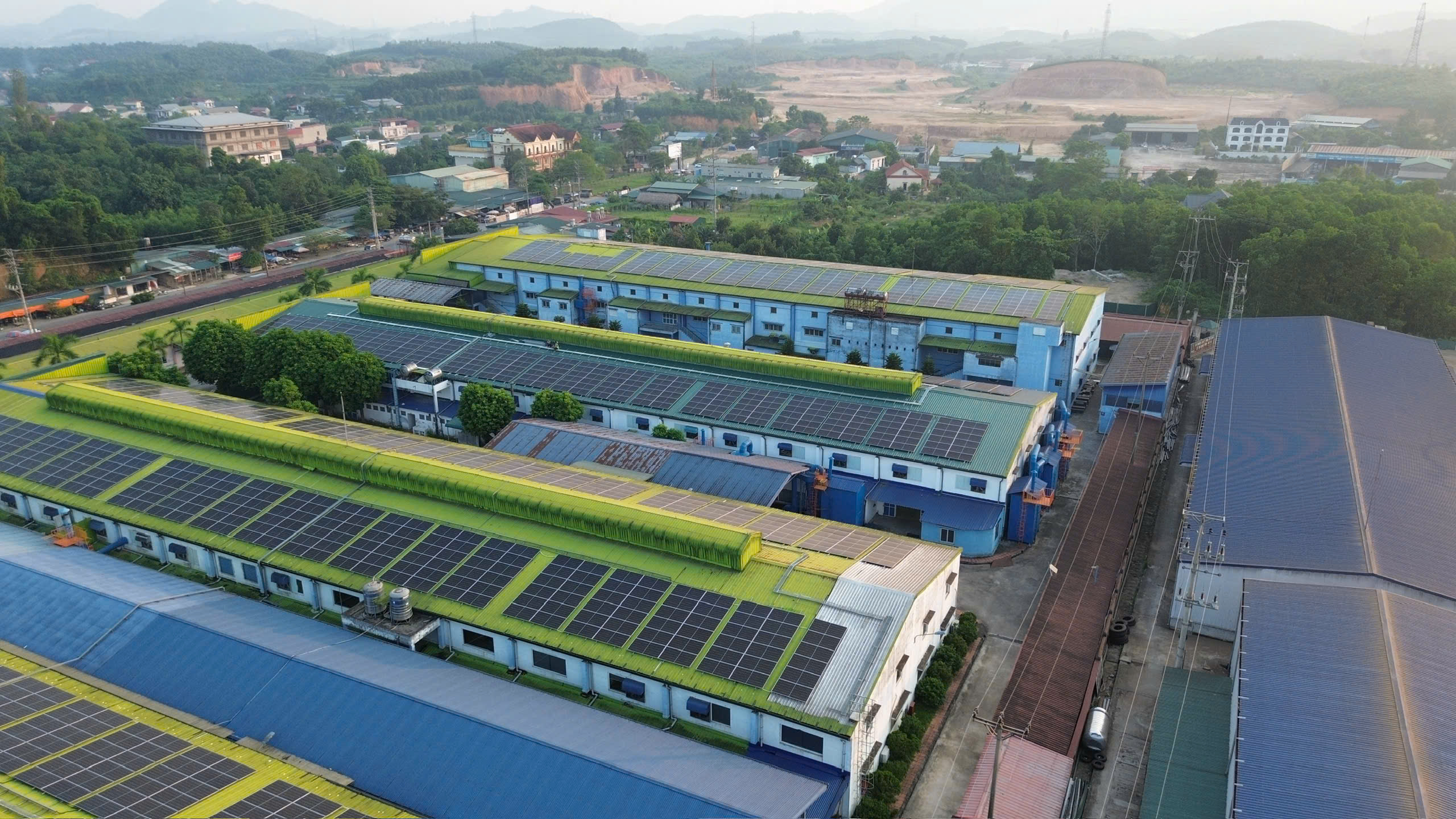
As energy costs rise and ESG requirements grow stronger, the Solar ESCO model enables businesses to deploy rooftop solar without upfront investment while optimizing long-term operating costs. When energy transition meets cash flow pressure In recent years, rooftop solar has become an increasingly familiar option for many manufacturing enterprises in Vietnam. However, despite its proven benefits in reducing electricity costs and carbon emissions, many companies continue to delay implementation. The main barrier is no longer technology, but the financial structure of the investment.
Under Directive 10/CT-TTg encouraging the development of self-consumption solar power, together with growing ESG compliance pressure from export markets, energy transition is becoming an integral part of corporate operational strategy. Nevertheless, allocating significant capital to rooftop solar systems remains challenging, as financial resources are often prioritized for production expansion, technology upgrades, and supply chain optimization.
In practice, the key question today is no longer whether companies should invest in solar energy, but how to structure financing in a way that reduces energy costs while preserving operational cash flow.
The barrier to rooftop solar is no longer technological Compared to earlier stages of market development, rooftop solar has already overcome most technical and awareness-related barriers. Many businesses now clearly recognize the value of on-site power generation in controlling operating costs and strengthening their sustainability profile.
However, a gap still exists between awareness and implementation. This is mainly because rooftop solar investments are often perceived as significant capital expenditures (CAPEX). In a volatile market environment where maintaining liquidity is critical, allocating capital to energy infrastructure is not always a top priority.
This conflict between energy transition goals and cash flow preservation has caused many technically viable projects to remain unimplemented. It shows that today’s biggest barrier to rooftop solar adoption lies in financing structure rather than technology.
ESCO: Deploy rooftop solar with no upfront investment The ESCO model offers businesses a different approach to rooftop solar deployment. Instead of investing in the entire system upfront, companies can use solar electricity through an energy service agreement, where costs are repaid gradually based on actual system performance.
This approach enables businesses to adopt solar power without initial capital expenditure while converting a large CAPEX investment into predictable and manageable operating expenses (OPEX). More importantly, most technical and operational risks are transferred to the solution provider, allowing companies to focus their resources on core production activities while still achieving energy savings and emission reduction targets.
As a result, rooftop solar is no longer a capital-intensive infrastructure investment decision, but a long-term cost management strategy.
Proven results from projects in Vietnam Real-world implementations across manufacturing and logistics sectors show that the ESCO model is becoming financially viable for many enterprises.
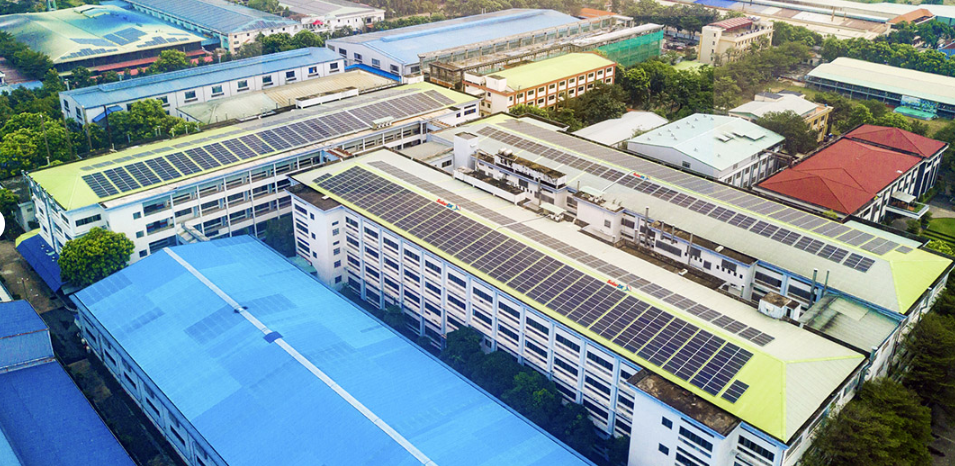
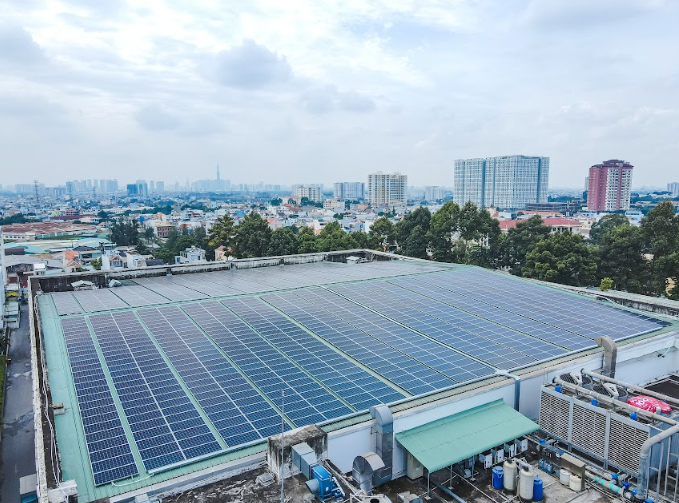
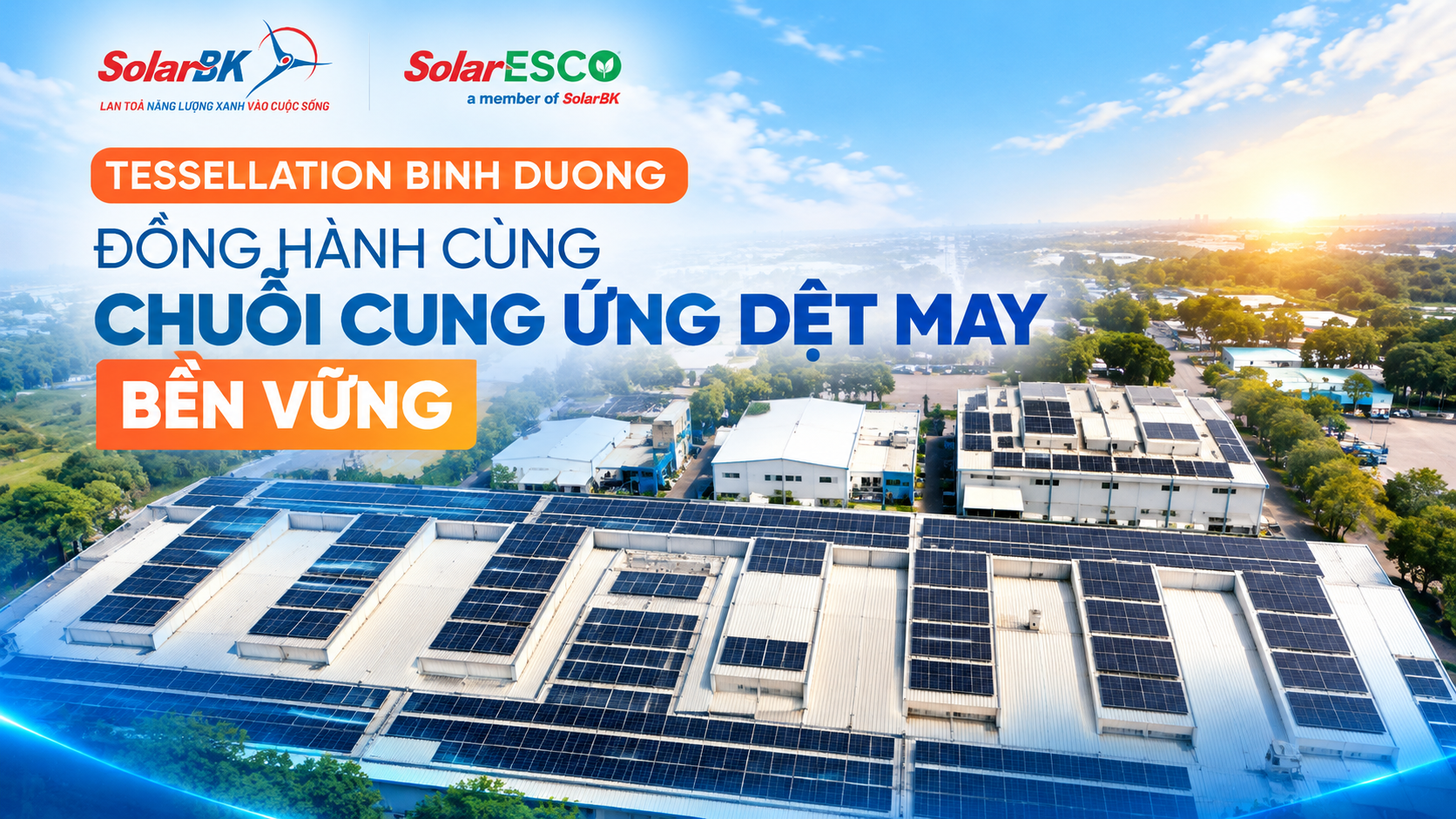
At Oasis Garment Co., Ltd., a 233.28 kWp rooftop solar system supplies approximately 54% of the factory’s electricity demand while reducing nearly 190 tons of CO₂ emissions annually—without requiring upfront investment. In the export textile supply chain, a 1 MWp solar project at Jim Brother’s Corp helps reduce more than 7,300 MWh of electricity consumption and approximately 952 tons of CO₂ emissions each year, supporting compliance with sustainability requirements from international partners such as Adidas. In the logistics sector, a 500.96 kWp rooftop system at ICD Tan Cang – Song Than generates around 784,218 kWh annually and is expected to save nearly VND 14 billion in energy costs over a 12-year cooperation period.
These cases demonstrate that once the upfront investment barrier is removed, rooftop solar can quickly deliver both financial and environmental value simultaneously.
When energy becomes a long-term competitive advantage As ESG standards increasingly influence participation in global supply chains, energy is becoming a strategic factor for manufacturing enterprises. International brands such as Nike and Adidas have established clearer requirements regarding emission transparency and renewable energy usage within their supply chains.
For exporting companies, the ability to deploy rooftop solar without disrupting production cash flow therefore becomes a significant competitive advantage. In this context, the ESCO model is not only an energy solution but also a financial instrument that enables businesses to proactively manage operating costs and strengthen their adaptability to long-term sustainability requirements.
The Solar ESCO model helps enterprises achieve decarbonization goals while preserving financial flexibility. Let SolarBK support you in assessing your current energy profile and designing an optimal energy financing structure for your facility.