Inheriting research & development background since 1975, SolarBK is proud to be a pioneer in laying the groundwork for clean energy industry in Vietnam and is now a leading company in this field.
To carry out the mission of applying clean energy into everyday life, we have researched and developed many solutions to make Solar power energy more diverse, convenient and cheaper.
Tessellation Binh Duong project: When execution capability creates value
Publish date 09/10/2026
Share
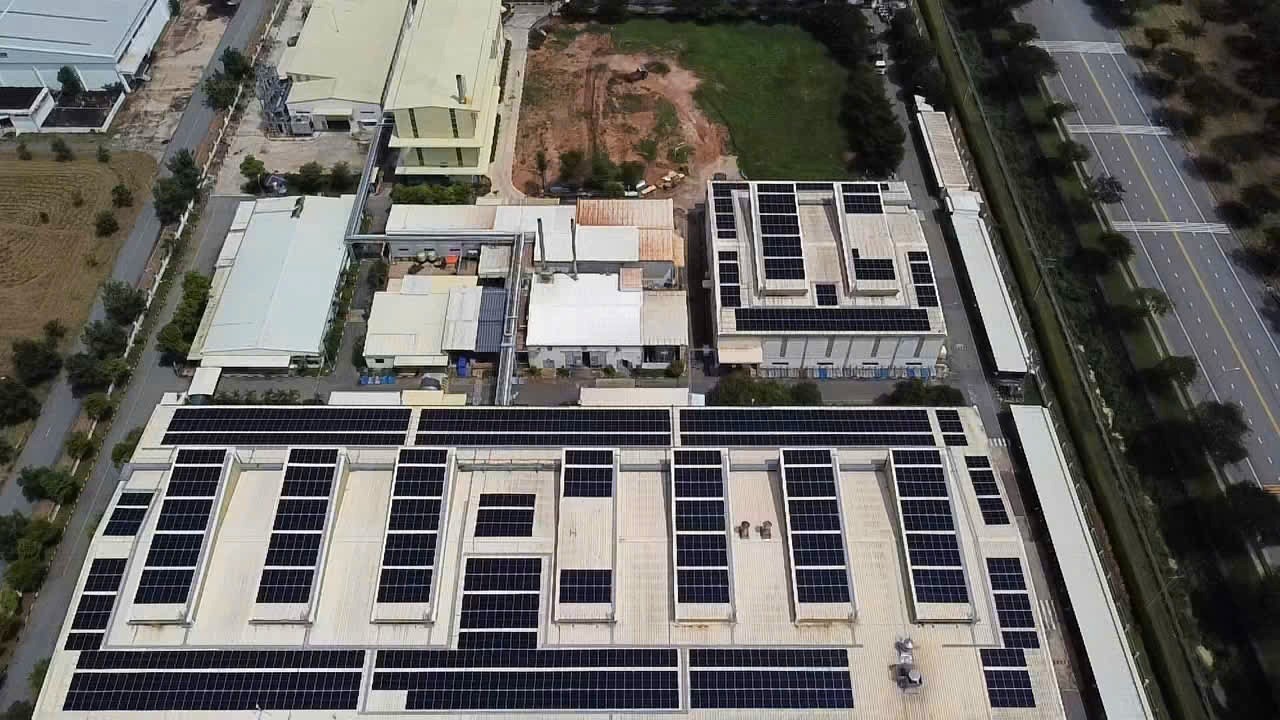
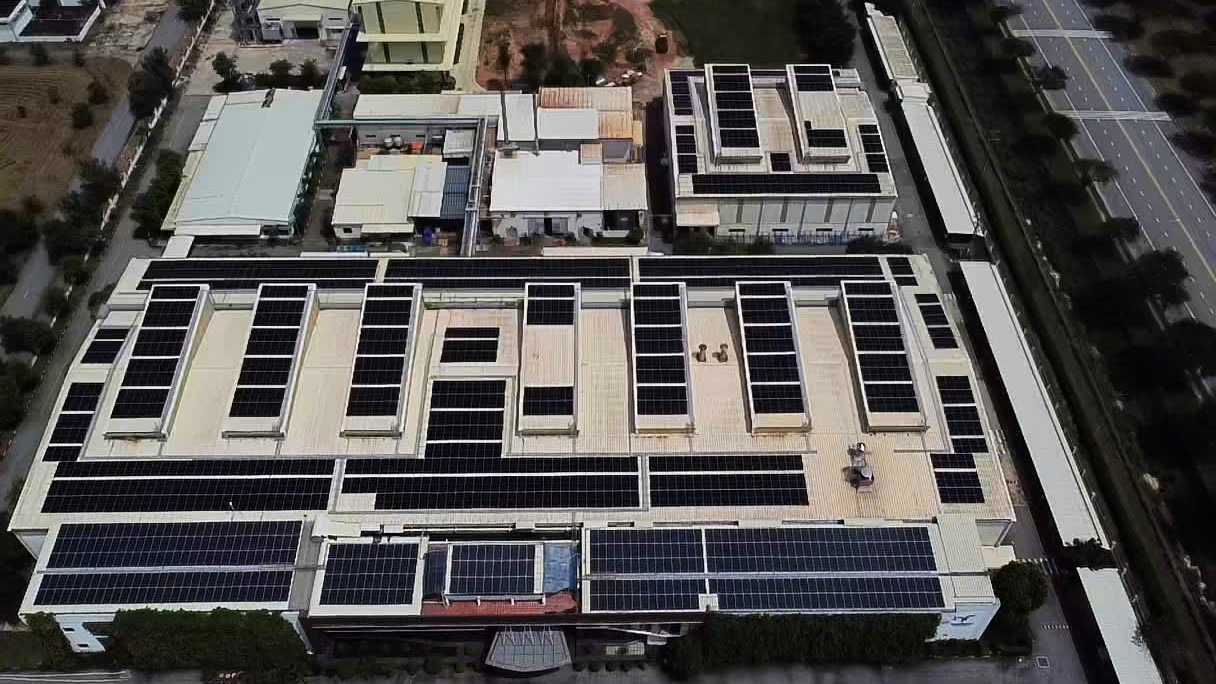
In industrial energy projects, an appropriate technical solution is only the starting point. At Tessellation Binh Duong, the approximately 842 kWp rooftop solar power system developed by SolarBK under the SolarESCO model demonstrates the importance of project management capabilities, compliance with industry-specific requirements, and long-term partnerships in supporting businesses on their energy transition journey.
Navigating Project Implementation in a Specialized Manufacturing Environment
Carbon emissions reduction, traceability, and green supply chain requirements are increasingly shaping the export-oriented textile and garment industry. Against this backdrop, clean energy is no longer simply a means of optimizing electricity costs but is becoming an integral part of businesses' long-term development strategies.
At Tessellation Binh Duong, the approximately 842 kWp rooftop solar power system developed by SolarBK under the SolarESCO model demonstrates the importance of project management capabilities, compliance with industry-specific requirements, and long-term partnerships in supporting businesses on their energy transition journey.
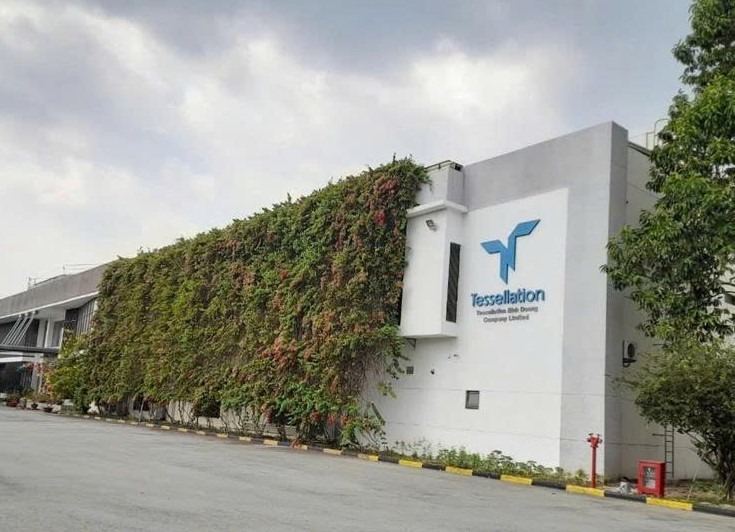
Tessellation Binh Duong is part of Tessellation Group, a Hong Kong-headquartered textile and apparel group specializing in garment manufacturing and integrated textile solutions for international supply chains. In Vietnam, Tessellation operates three garment factories and one knitting facility, with an annual production capacity exceeding 20 million products and a workforce of approximately 8,000 employees.
As part of its sustainability strategy, Tessellation Binh Duong selected SolarBK to implement a rooftop solar power system under the SolarESCO model. The project aims to harness on-site renewable energy, improve electricity utilization, and support emissions reduction objectives across manufacturing operations. From an infrastructure perspective, the project benefits from relatively new factory rooftops that require no structural reinforcement prior to installation. This provides favorable conditions for equipment arrangement and construction planning in accordance with the selected technical design.
However, Tessellation Binh Duong's status as an export processing enterprise introduces specific implementation requirements. Unlike many conventional rooftop solar projects, the delivery and receipt of materials and equipment at the facility must comply with applicable customs procedures and management regulations.
These requirements call for close coordination between supply planning, construction activities, and the factory's internal management processes. Beyond technical considerations, ensuring consistency across implementation stages and compliance with relevant regulations becomes an essential component of project management.
The Tessellation Binh Duong project illustrates that implementing rooftop solar power in an industrial environment involves more than equipment installation. It also requires a thorough understanding of each customer's operational conditions and compliance requirements.
From Technical Expertise to Project Management Excellence
For industrial energy projects, engineering design and technology provide the foundation. However, turning a technical solution into an operational system also requires effective project execution, stakeholder coordination, and compliance with the factory's safety, management, and operational standards.
At Tessellation Binh Duong, the requirements associated with an export processing enterprise mean that project implementation must be aligned with the customer's overall material management procedures and manufacturing operations. These considerations must be addressed alongside technical design and construction scheduling.
The approximately 842 kWp rooftop solar system has now entered the testing and commissioning phase in preparation for commercial operation. This milestone marks the transition from installation completion to the verification and assessment of actual operating conditions.
Tessellation Binh Duong's status as an export processing enterprise introduces specific implementation requirements. Unlike many conventional rooftop solar projects, the delivery and receipt of materials and equipment at the facility must comply with applicable customs procedures and management regulations.
Prior to Tessellation Binh Duong, SolarBK had partnered with several businesses in the textile, garment, and export manufacturing sectors, including Creative Group, Alliance One Innotex, Jim Brother's, SEDO Vinako, Thuan Phuong Group, and Leading Star.
Experience gained from these projects provides a foundation for SolarBK to address diverse technical, safety, implementation, and operational management requirements across different manufacturing facilities.
As corporate energy transition needs become increasingly diverse, an energy partner's capabilities are measured not only by installed capacity or equipment portfolios but also by its ability to develop solutions tailored to each customer's operational characteristics and successfully implement them in practice. This approach continues to guide SolarBK in developing energy solutions for commercial and industrial enterprises.
From Installed Capacity to Long-Term Operational Value
The approximately 842 kWp rooftop solar power system at Tessellation Binh Duong has been developed under the SolarESCO model to supplement the facility's electricity supply with on-site renewable energy.
According to preliminary design calculations, the system is expected to generate approximately 1.297 million kWh of clean electricity annually, corresponding to an estimated reduction of around 855 tonnes of CO₂ emissions per year. These projections highlight the project's potential contribution to improving energy efficiency and reducing the carbon footprint of manufacturing operations.
In addition to the solar power generation system, the technical solution incorporates ERIS, an energy management platform developed by SolarBK. ERIS supports the monitoring of electricity generation, equipment status, and operational parameters. Integrating solar generation with digital monitoring technology provides a foundation for tracking system performance and supporting long-term operation and management.
For Tessellation, the project represents a step toward realizing its clean energy strategy while supporting the company's efforts to adapt to increasingly stringent sustainability requirements across international textile and garment supply chains.
The approximately 842 kWp rooftop solar power system at Tessellation Binh Duong has been developed under the SolarESCO model to supplement the facility's electricity supply with on-site renewable energy.
For SolarBK, Tessellation Binh Duong further strengthens its experience in delivering energy solutions within manufacturing environments characterized by specialized management requirements, where technical expertise must be combined with effective project execution and coordination among stakeholders. With 20 years of experience in the clean energy sector, SolarBK has progressively developed integrated capabilities spanning consulting, engineering design, project implementation, and operations management. By combining technology, investment models, and practical experience, the company continues to support businesses throughout their energy transition journeys.
The Tessellation Binh Duong project demonstrates that the value of an energy partner lies not only in designing the right solution but also in its ability to bring that solution to life within real-world manufacturing environments, laying the groundwork for long-term operational performance and sustainable business development.
Every manufacturing facility has its own infrastructure conditions, operational requirements, and sustainability objectives. Drawing on its experience in industrial energy projects, SolarBK works alongside businesses to identify and implement energy solutions suited to their specific needs.