Inheriting research & development background since 1975, SolarBK is proud to be a pioneer in laying the groundwork for clean energy industry in Vietnam and is now a leading company in this field.
To carry out the mission of applying clean energy into everyday life, we have researched and developed many solutions to make Solar power energy more diverse, convenient and cheaper.
Integrated PV–BESS Energy Management: A New Approach for Businesses in 2026
Publish date 02/03/2026
Share
As we enter 2026, Vietnam’s renewable energy market is witnessing a structural shift in how businesses approach solar power. Instead of viewing rooftop solar as a standalone investment aimed at reducing electricity costs, companies are increasingly positioning solar within a broader energy management strategy—closely tied to operations, data, and long-term competitiveness.
This transition is not driven by a technological breakthrough, but by operational reality. As electricity consumption scales up and time-of-use (TOU) pricing gains attention, businesses are compelled to reassess how they manage loads and optimize energy costs more proactively.
At the same time, transparency in emissions reporting and greenhouse gas accounting, aligned with international standards such as ISO 14064, has become more concrete amid growing ESG expectations and global supply chain requirements.
From PV Installation to Data-Driven Energy Management
In its early stages, rooftop solar enabled businesses to utilize clean energy and reduce peak-hour electricity expenses. However, as solar penetration increases, the traditional “install–commission–handover” model reveals its limitations.
Companies are now facing new operational and strategic questions. How can they optimize loads across peak and off-peak hours? How can they manage demand peaks and maintain operational stability as production expands? And how can they build reliable energy data systems to support ESG reporting and carbon accounting?
Energy is no longer merely a technical asset, it has become a management variable. Data from energy systems, generation output, consumption patterns, and usage timing, is increasingly leveraged as strategic intelligence to support operational decisions, cost optimization, and production planning.
PV–BESS and the Optimization Challenge
Within this new structure, solar PV remains the foundation for on-site clean energy generation. However, to optimize economic performance amid fluctuating energy costs and stricter load management requirements, Battery Energy Storage Systems (BESS) are becoming an important complementary component in corporate energy architecture.
When properly designed and aligned with load characteristics, BESS can support peak shaving, enhance energy allocation flexibility, and improve on-site solar self-consumption. Storage systems also allow businesses to manage energy distribution across time periods more effectively, contributing to operational stability and cost control during high-demand intervals.
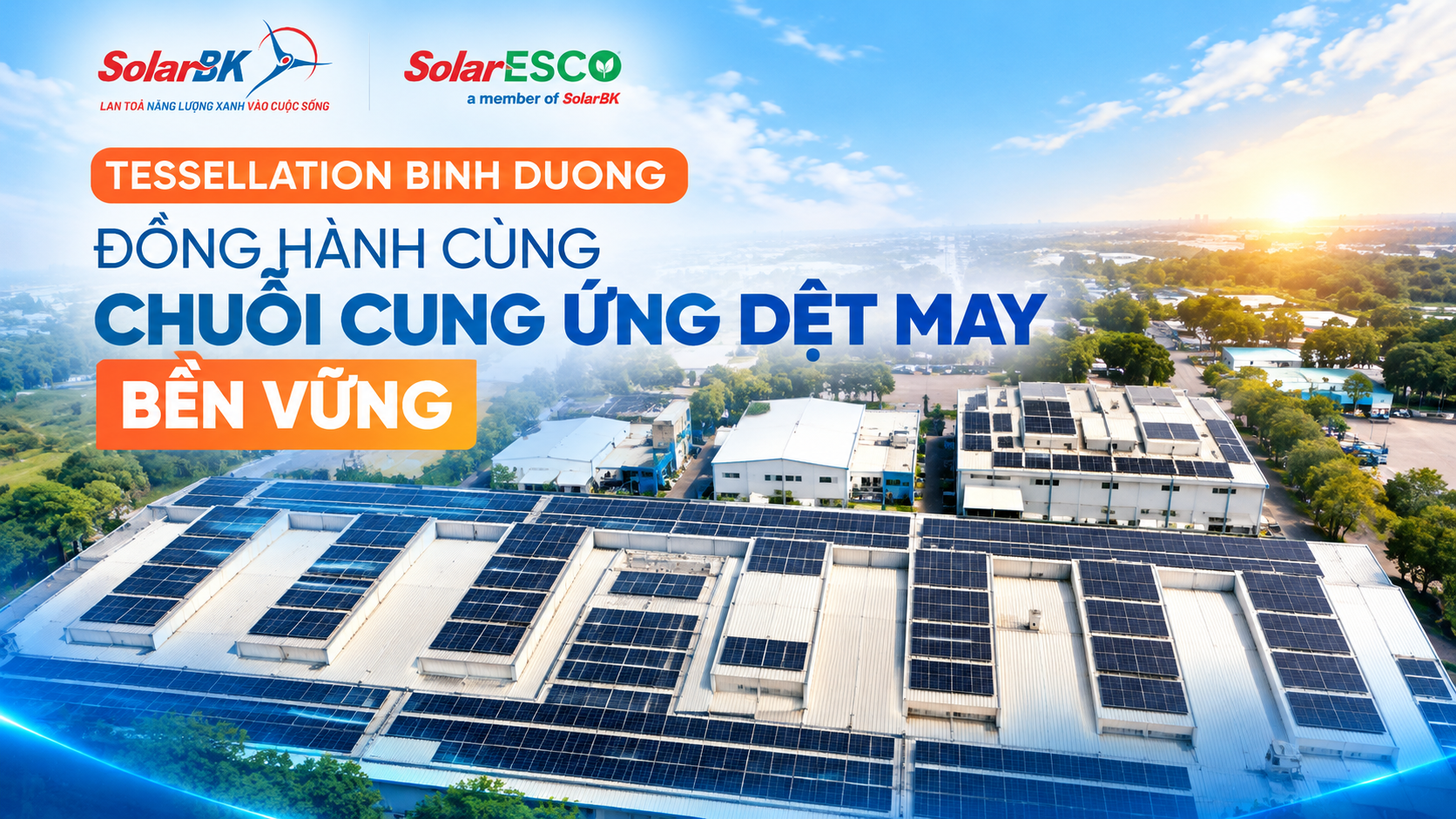
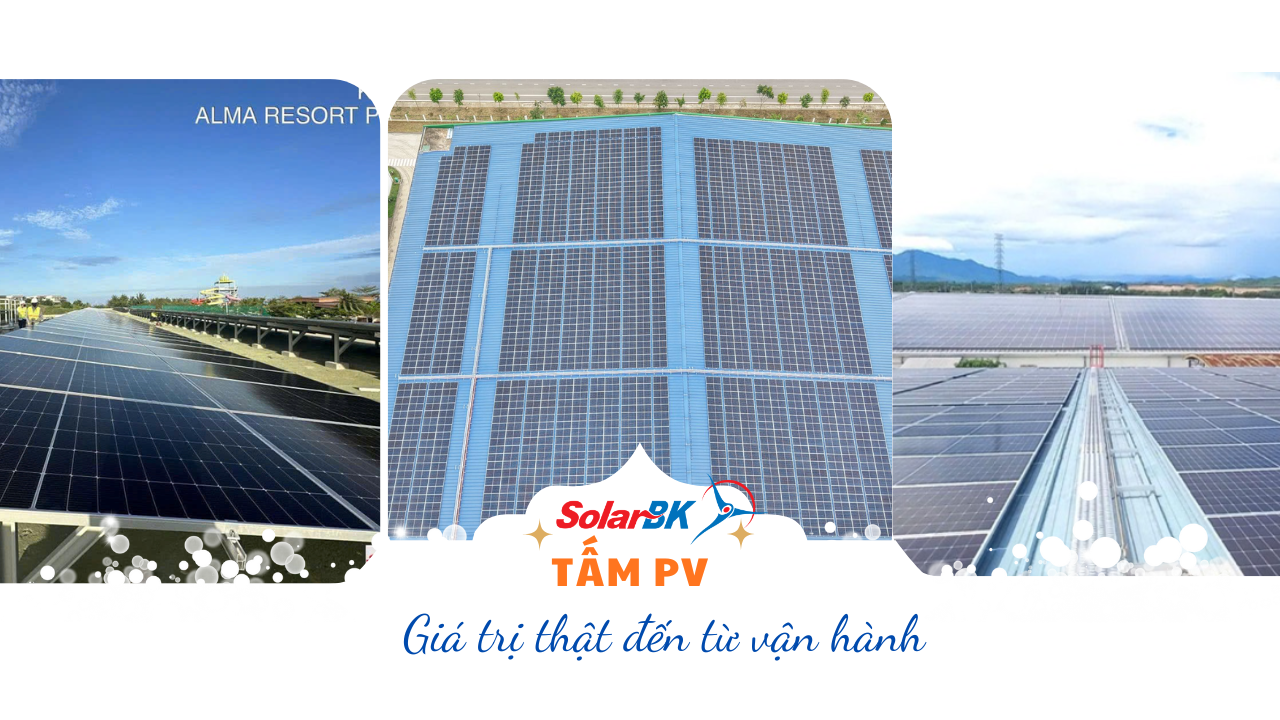
During the initial stage, rooftop solar enabled businesses to utilize clean energy and reduce electricity costs during peak hours.
However, the effectiveness of a PV–BESS model depends heavily on load profiles, consumption patterns, and operational strategies. Not every production model will achieve optimal performance without thorough load analysis and financial simulation prior to investment. In this context, BESS is not merely a backup system—it can become a strategic energy management tool when integrated with proper data and management platforms.
Digital Energy Infrastructure and the Role of SolarBK
As the market shifts from deployment to management, businesses increasingly seek solutions that go beyond hardware such as panels and storage systems, toward comprehensive monitoring and optimization platforms.
In addition to providing IREX photovoltaic panels and BESS solutions, SolarBK positions itself as a developer of ERIS, a cloud-based digital energy management platform that enables real-time monitoring, analysis, and management of energy data, while supporting operational performance tracking and carbon emissions management.
Through ERIS, businesses can monitor generation output, consumption loads, and system performance in real time, enhancing operational control and decision-making capabilities.
In this approach, energy data serves not only technical purposes but also supports consumption efficiency analysis, demand management, emissions reporting, and long-term ESG and Net Zero strategy development. Energy is therefore integrated into overall corporate governance rather than treated as an isolated technical function.
The integrated PV–BESS energy management trend reflects not only technological progress, but also the maturation of Vietnam’s renewable energy market—where energy is increasingly viewed as a strategic component of long-term competitive advantage.
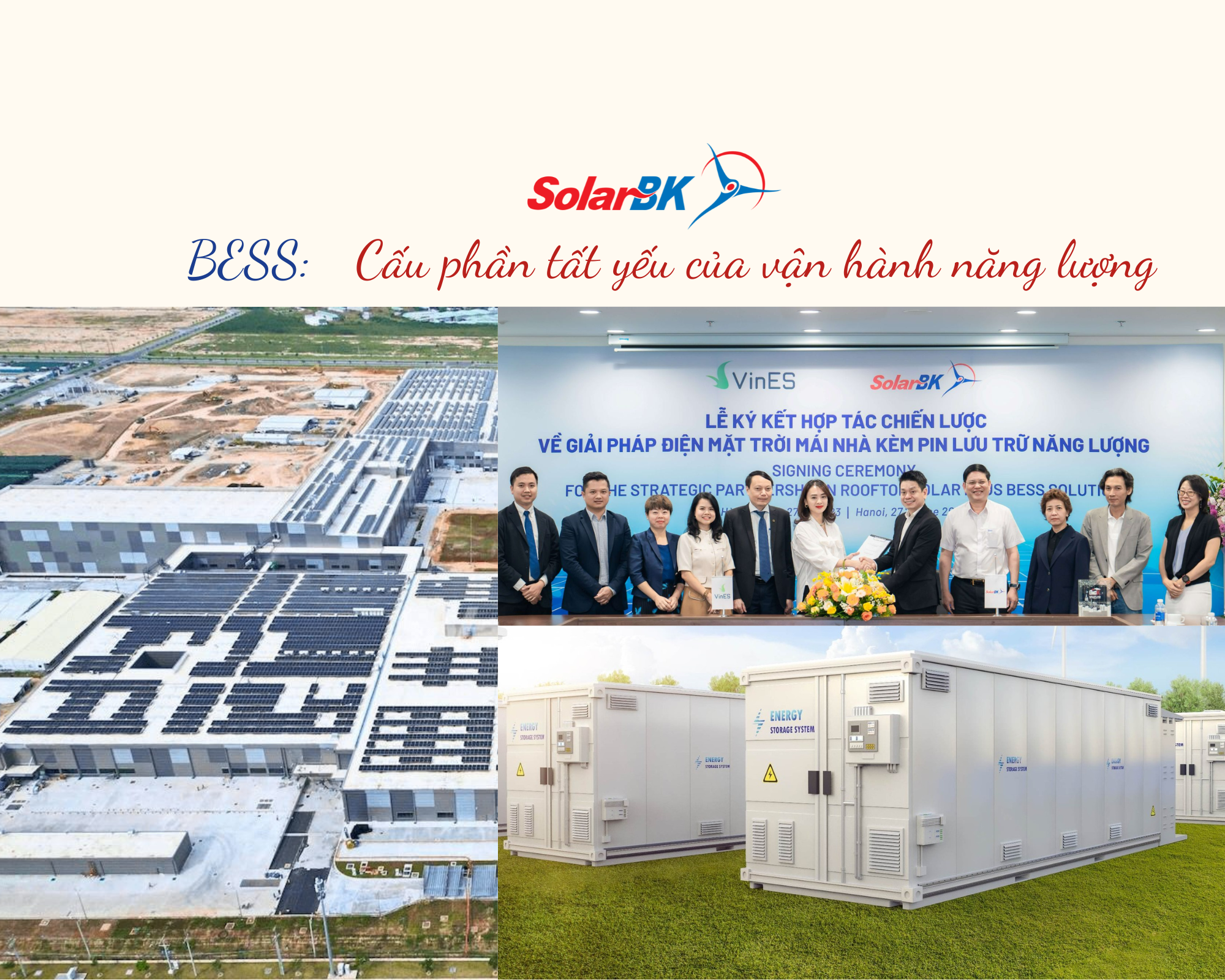
Battery Energy Storage Systems (BESS) can support peak shaving, enhance flexibility in energy allocation, and improve on-site solar self-consumption.
Conclusion
The year 2026 marks a shift in corporate mindset, from installing solar systems to managing energy through data. Amid fluctuating energy costs, rising ESG requirements, and increasing operational pressure, integrated PV–BESS models combined with digital energy management platforms are emerging as a strategic direction worth considering.
Businesses that select the right platform and partner from the outset will gain a competitive edge, as energy evolves from a cost item into a strategic pillar of sustainable growth.