Inheriting research & development background since 1975, SolarBK is proud to be a pioneer in laying the groundwork for clean energy industry in Vietnam and is now a leading company in this field.
To carry out the mission of applying clean energy into everyday life, we have researched and developed many solutions to make Solar power energy more diverse, convenient and cheaper.
From Operating Costs to Green Standards: How Is the Wood Industry Changing?
Publish date 27/01/2026
Share
Vietnam’s wood industry is entering a phase where energy is no longer a supporting function behind production. Rising electricity costs, along with increasingly stringent emission requirements from export markets, especially Europe and North America, are turning energy into a core competitive factor.
For wood manufacturers, the challenge is no longer about saving electricity alone, but about maintaining stable operations, controlling long-term costs, and meeting mandatory sustainability standards across global supply chains. Energy transition is no longer a future concept, it is a present-day business challenge.
Energy Challenges in a Green Export Context
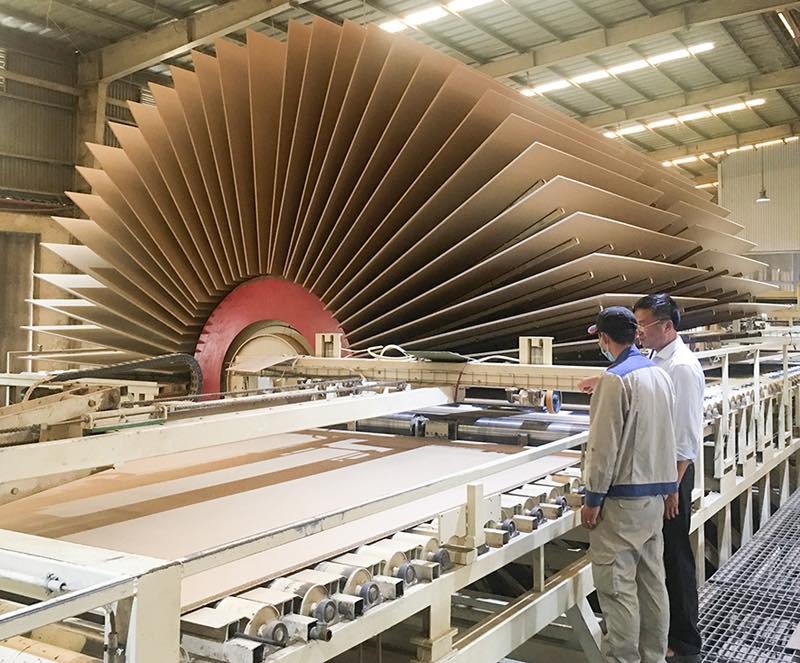
Wood processing, particularly MDF manufacturing, is characterized by high and continuous electricity consumption. Pressing, drying, and material processing lines operate at large capacity for extended periods, making energy costs a significant component of production expenses.
At the same time, environmental compliance is becoming a prerequisite rather than a differentiator. Demonstrating emission reduction, renewable energy use, and transparent environmental data is increasingly essential to retain export orders.
Wood processing, particularly MDF manufacturing, is characterized by high and continuous electricity consumption
In this context, rooftop solar is no longer a symbolic investment. A clear distinction is emerging between systems installed “for appearance” and those integrated into operational structures. Only the latter creates strategic value.
SolarBK Supporting the Wood Industry’s Green Transition
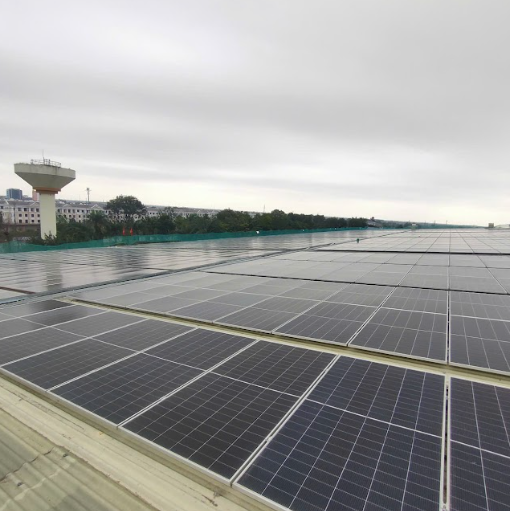
The rooftop solar project at MDF VRG Quang Tri exemplifies a long-term energy approach. SolarBK deployed a 1,875 kWp rooftop solar system, generating approximately 2.7 million kWh annually and reducing about 1,827 tons of CO₂ per year, equivalent to planting over 91,000 trees.
More importantly, sustainability commitments are translated into measurable and verifiable data. Solar power here is not a standalone investment, but an integrated part of the production system, designed, operated, and monitored in alignment with factory operations and cost structures.
The rooftop solar project at MDF VRG Quang Tri exemplifies a long-term energy approach.
Energy Transition: From Choice to Competitive Requirement
From this case, a broader industry trend becomes evident. As environmental barriers rise, competitiveness depends not only on pricing or craftsmanship, but on the ability to meet new sustainability standards.
Companies that delay energy transition face rising costs and exclusion risks from demanding supply chains. Those investing early and correctly in sustainable energy infrastructure gain long-term cost advantages and stronger credibility with global partners.
Energy transition in the wood industry begins not with declarations, but with concrete investment decisions at factory level.
If your wood manufacturing facility is considering rooftop solar and wants an assessment aligned with actual operations, please leave your phone number or contact details. SolarBK’s team will proactively consult based on load profiles, operational characteristics, and sustainability goals.