Inheriting research & development background since 1975, SolarBK is proud to be a pioneer in laying the groundwork for clean energy industry in Vietnam and is now a leading company in this field.
To carry out the mission of applying clean energy into everyday life, we have researched and developed many solutions to make Solar power energy more diverse, convenient and cheaper.
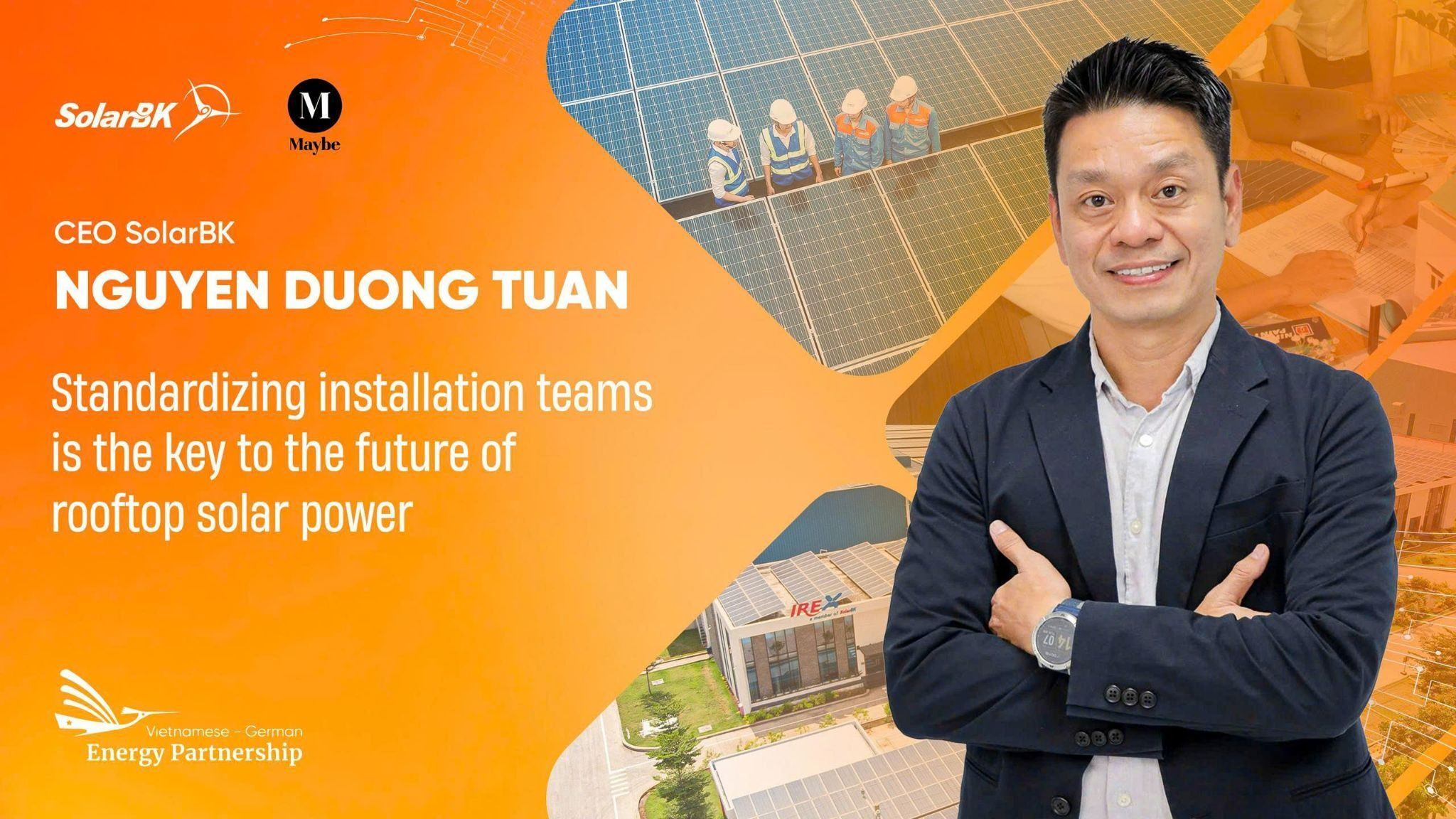
CEO Nguyen Duong Tuan: Standardizing Installation Teams – The Key to Trust in Vietnam’s Rooftop Solar Market
Publish date 31/03/2026
Share
After nearly four years (2020 - 2024) described as an "ice age" for the solar industry—a period marked by policy uncertainty and a nearly frozen market—things are finally beginning to warm up. The introduction of Decree 135/2024/ND-CP, along with specific implementation guidelines, has cleared a new path for both households and businesses.
However, the sudden influx of installers offering a wide range of prices has left consumers lost in a "maze" of information, making it difficult to distinguish true value. In this context, SolarBK CEO Nguyen Duong Tuan shared his candid perspectives on the challenges of trust and safety for a system that is meant to stay on one's roof for the next 25 to 30 years.
Mr. Tuan emphasized: "If the quality of implementation is not strictly controlled, this new wave of growth itself could become the industry's greatest risk in the coming years."
From Solar Water Heaters to Five Development Phases of the Market
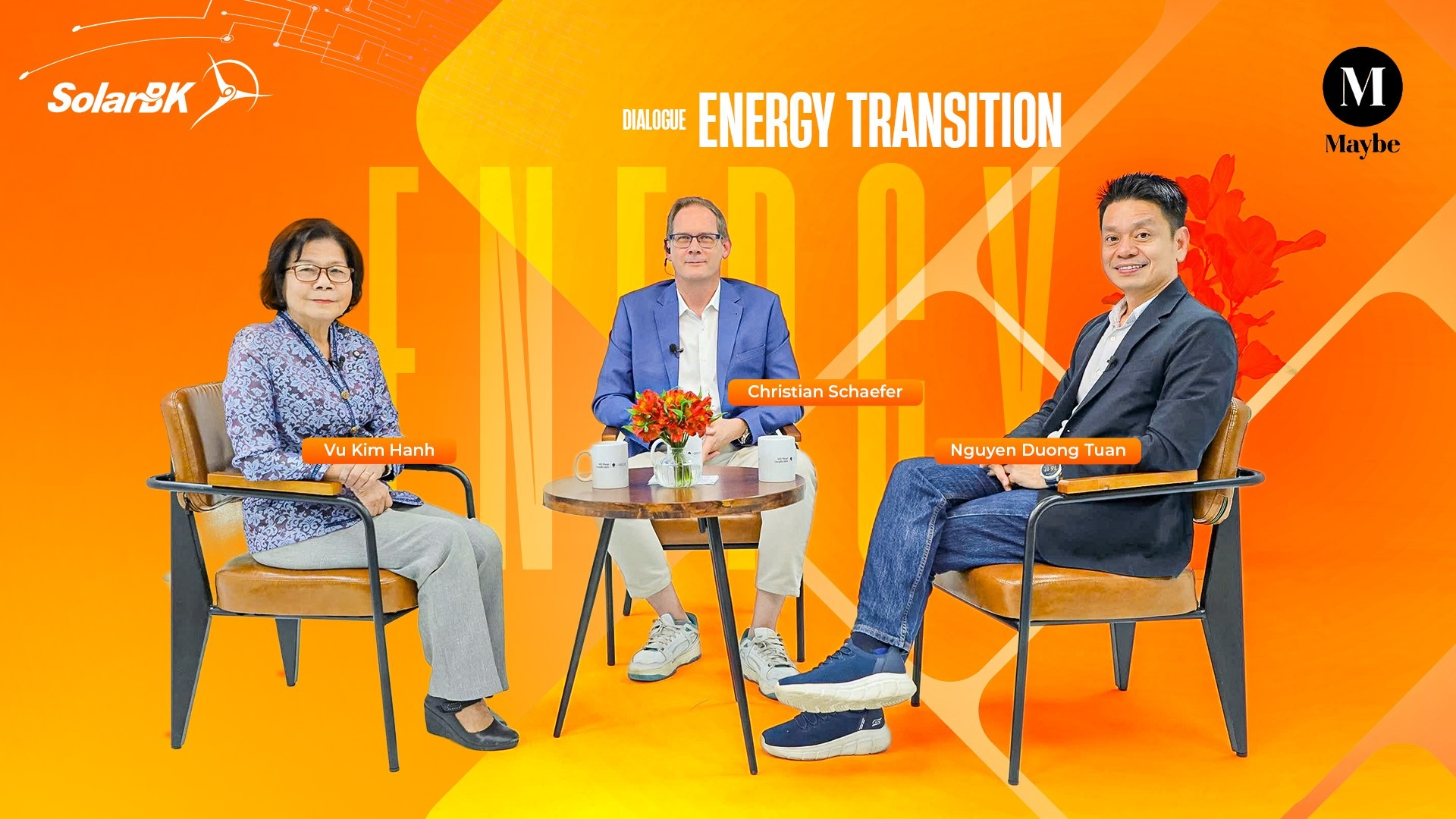
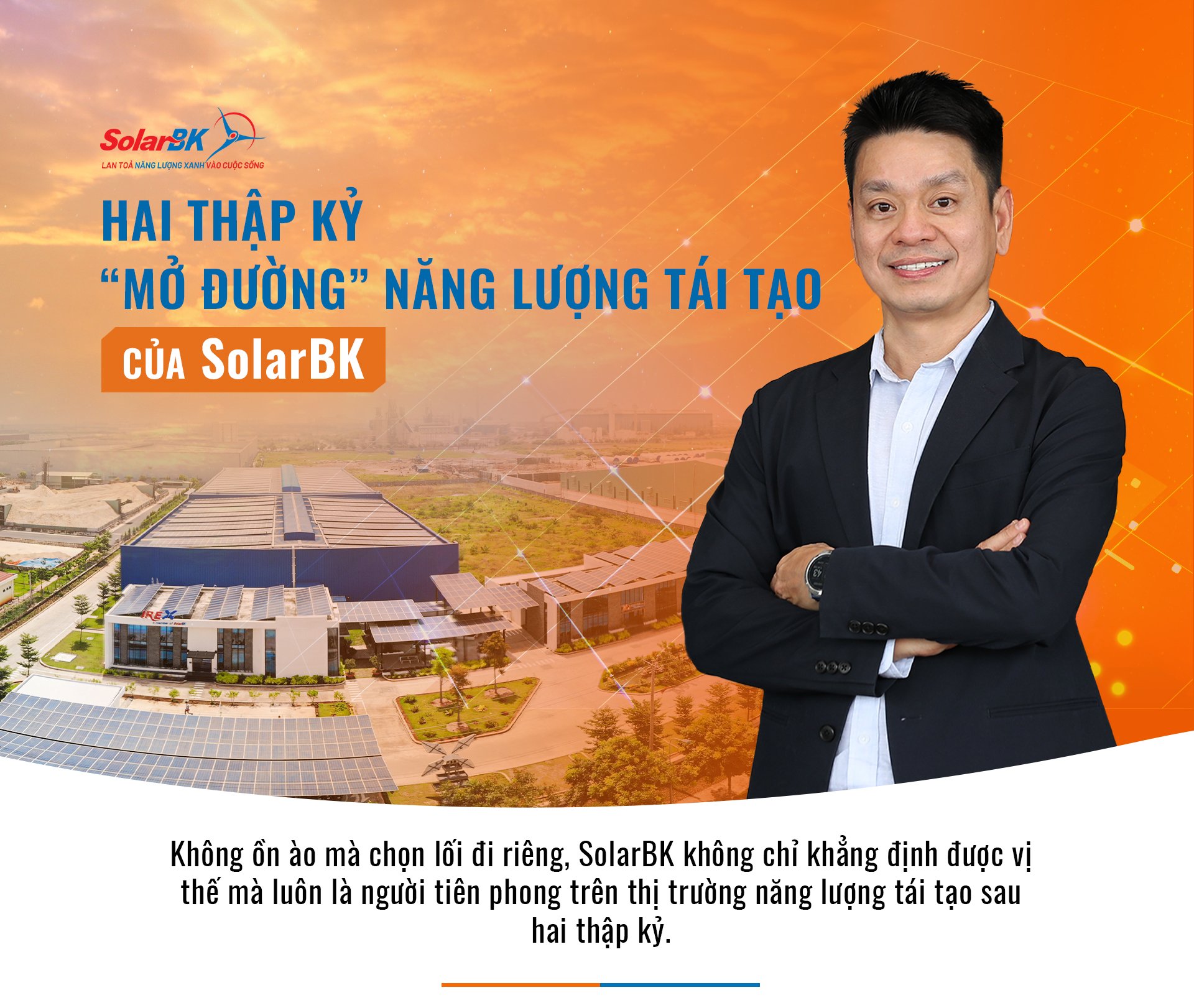
Speaking on the program Energy Transition Dialogue with journalist Vu Kim Hanh, Mr. Tuan impressed audiences with the calm demeanor of a researcher-entrepreneur. SolarBK, short for “Solar Bach Khoa”, represents nearly two decades of collaboration between academia and industry in advancing Vietnam’s renewable energy sector.
Looking back to 2006, he noted that the market has gone through five distinct phases:
A period when renewable energy was largely unknown
The solar water heater adoption phase
The FIT policy boom from 2017–2020
The policy “ice age” from 2020–2024
The current reopening phase supported by clearer regulations following Power Development Plan VIII
Domestic research and manufacturing capabilities helped SolarBK maintain development capacity during market downturns rather than depending entirely on policy cycles.
According to Nguyễn Dương Tuấn, if implementation quality is not properly controlled, the next wave of market expansion could become the industry’s greatest risk over the next 20–30 years.
Rooftop Solar as a Long-Term Household Investment
One major change in today’s market is improved economic accessibility for households.
According to Mr. Tuan, solar system costs have dropped by approximately 60–70% compared to 2020 due to global manufacturing oversupply.
For households spending around 1–2 million VND per month on electricity:
A 3–4 kWp system Requires only 20–30 m² of roof space Costs under 30 million VND Achieves payback within 4–5 years in southern Vietnam
Afterward, the system can continue operating reliably for another 20–25 years.
Journalist Vu Kim Hanh, Mr. Nguyen Duong Tuan – CEO of SolarBK, and Mr. Christian Schaefer – German Energy Expert.
Additionally, regulators are considering increasing the allowable surplus electricity sales ratio from 20% to 50%, gradually shifting rooftop solar from a cost burden into a long-term household energy investment solution.
New financing models, such as solar leasing or pay-as-you-save mechanisms, are also expanding access for households without large upfront capital.
However, according to Mr. Tuan, the greatest challenge today is no longer technology, but implementation quality.
As policies return, hundreds of new providers have entered the market offering lower prices but without ensuring technical capability or long-term service reliability.
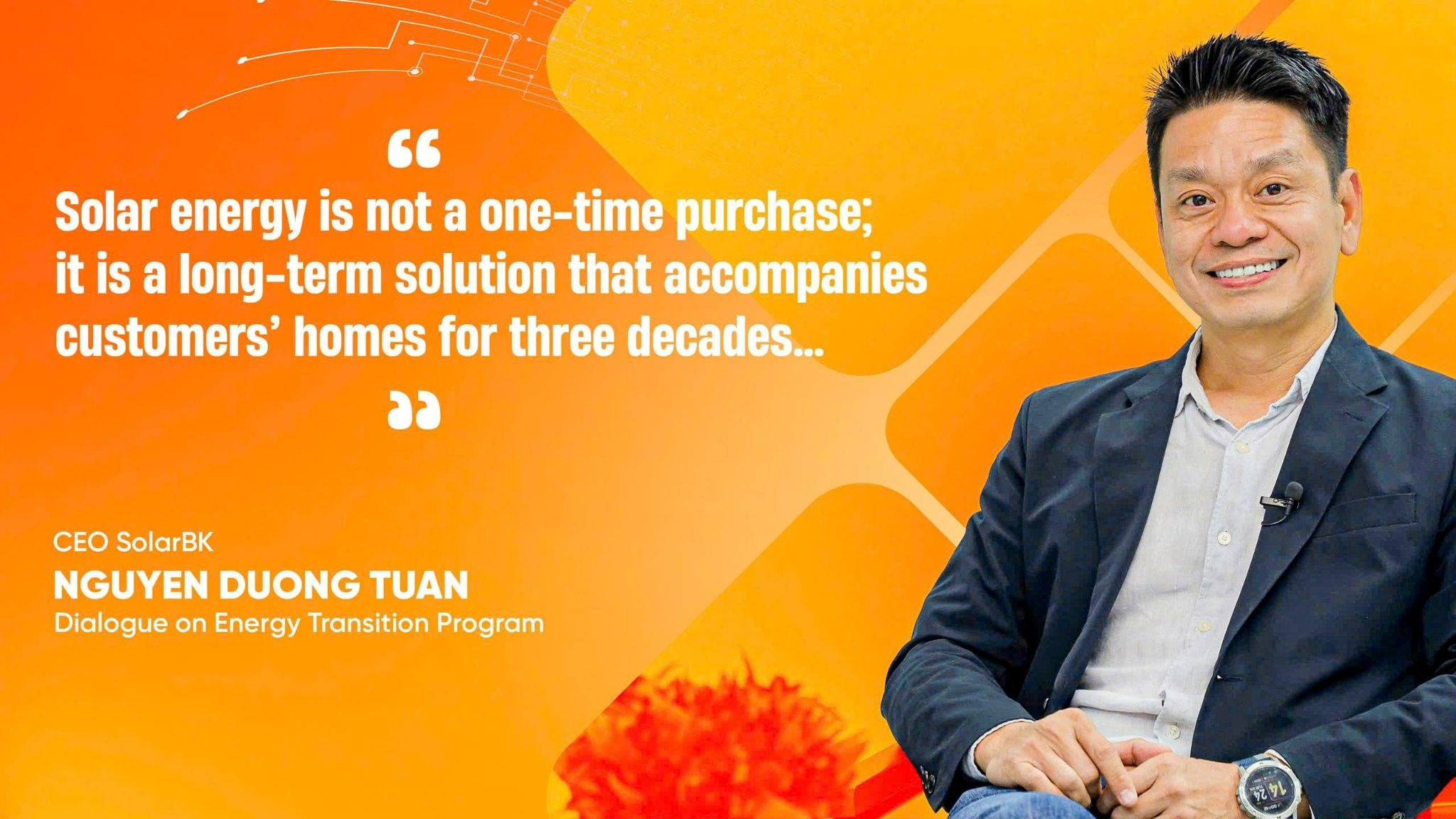
“Solar energy is a 25-year commitment. Choosing the wrong installer or low-quality equipment carries real fire and safety risks,” he warned.
If consumer trust declines, the negative impact could extend across the entire renewable energy sector, not just individual companies.
Standardizing Installation Teams: The Missing Piece of Energy Transition
Based on this reality, Mr. Tuan proposed establishing certification mechanisms for rooftop solar installation companies similar to those used in Germany.
This is not only a technical issue but also a foundational requirement for protecting consumer trust in a market where systems operate for 25 years or more.
Mr. Tuan proposed establishing certification mechanisms for rooftop solar installation companies similar to those used in Germany.
Under this model:
providers must meet technical standards
installations must be approved by regulators or grid operators before deployment
If applied in Vietnam, such licensing mechanisms would help households choose reliable providers while improving technical quality and operational safety across the market.
This is also an essential step toward positioning rooftop solar as distributed energy infrastructure within Vietnam’s national energy transition strategy.
Strengthening Collaboration Between Government, Academia, and Industry
Alongside policy recommendations, SolarBK continues promoting collaboration between government agencies, universities, and businesses in research and technology deployment.
A notable example is the Solar Balcony project implemented in partnership with GIZ, featuring transparent double-glass solar panels that maintain performance while integrating well with urban apartment architecture.
According to Mr. Tuan, energy transition is not only about technology or investment costs. It is also about building a long-term operational ecosystem among businesses, regulators, and electricity users.
In this new development cycle of rooftop solar, competition will no longer depend on installation speed—but on the ability to maintain quality throughout the system lifecycle.
Because the decisive factor is not how many systems are installed, but how stable and safe they remain over 20–25 years of operation.
If implementation quality is not ensured today, technical risks could become long-term barriers to the entire industry’s growth in the future.
Therefore, establishing certification mechanisms for installation teams is a necessary step toward ensuring safety and enabling rooftop solar to become a core component of Vietnam’s distributed energy infrastructure strategy.